





New geopolitical "messages". traditional security guarantees are no longer reliable;
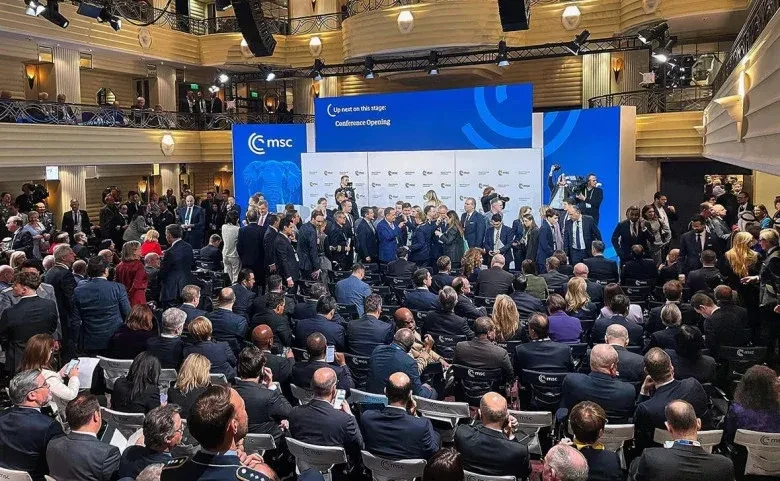
"Fact" "Fact" daily writes: The 62nd Munich Security Conference, which took place in unprecedented conditions of global turbulence, became not just another diplomatic platform, but a kind of border line, recording the final dismantling of the old world order and the irreversible process of the formation of new, multipolar and highly unpredictable power centers.
The atmosphere prevailing during the discussions at the conference was filled not with optimistic forecasts, but with sober, sometimes even cynical pragmatism, as world leaders, experts and military strategists faced a reality where the norms of international law have been replaced by the "law of force", and allied obligations have become situational and conditional. The key message of the conference was clear: the world has entered a phase of "structural instability" where security has ceased to be a collective good and has turned into a scarce resource, fought for in all dimensions of hybrid wars, economic coercion and technological race.
In this context, some experts put forward the premise that "Munich 2026" actually signaled the end of the "Pax Americana" ("American Peace") or the era of American dominance, but not in favor of the Chinese or any other single dominant pole, but in favor of a mosaic system where the middle powers, from Turkey and India to Saudi Arabia and Brazil, began to dictate. its own rules of the game, skillfully maneuvering between superpower conflicts and rejecting the traditional West vs. Rest dichotomy.
Naturally, the crisis of the European security architecture remained at the core of the discussions, which deepened against the background of the protracted Ukrainian conflict and its transformation from a local war to a long-term war of attrition.
In this case, it forces Europe to rethink the concept of its strategic autonomy. If earlier European leaders spoke about solidarity with the US within the framework of NATO, then at the Munich conference the fear of Washington's isolationist policy, of being surrounded by the American sphere and of the USA's attention being shifted more to the Indo-Pacific region, which prevents the Old World from putting its own defense industry on military rails and the need to provide the security "umbrella" with its own forces, became more evident.
This implies not only a sharp increase in military budgets, but also a manifestation of political will, which is often absent in bureaucratized European structures, on the other hand, there are manifestations of disagreement in the ranks of EU countries on various issues.
This dissonance, within the framework of desires and opportunities, became the main leitmotif of the backstage discussions of the conference. In parallel, the conference revealed an unprecedented increase in the subjectivity of the Global South, as countries in Africa, Latin America and Asia refuse to join sanctions regimes or choose between Washington and Beijing (or Moscow), preferring a policy of "transactional neutrality" that allows them to reap maximum benefits from all sides.
This "new non-alignment movement" lacks an ideological basis and is based exclusively on national interests and economic pragmatism, which poses a new challenge to the value-oriented foreign policy of the West, forcing the latter to review its approaches and make its partnership proposals more tangible and tangible.
Especially noteworthy was the emphasis that economic interdependence in the modern world order is no longer considered as a guarantee of peace, but as a source of vulnerability and a tool of geopolitical pressure, taking into account the development of trade wars and the policy of raising tariffs by the United States.
And that vulnerability leads to the fragmentation of the global economy, the reshaping of supply chains and the strengthening of protectionist tendencies. At the Munich conference, the question of technological sovereignty was also raised with particular urgency, where artificial intelligence, cyber security and space technologies are considered as the main means of achieving strategic superiority.
The technology race between the US and China, spanning everything from semiconductors to quantum computing, is creating a "digital iron curtain" that threatens to divide the world into two incompatible technological ecosystems, with disastrous consequences for global innovation and economic growth.
The discussions showed that the outcome of future wars will be determined not by the number of tanks, but by the efficiency of algorithms and the ability to manage data, which gives small and technologically advanced states (such as Israel, Singapore or Estonia) a disproportionate influence in the new security environment.
At the same time, the security component of climate change—competitions for water resources, food security, and climate change-induced migration—were seen as “threat multipliers” that could destabilize entire regions and trigger new conflicts, especially in resource-scarce zones.
Analyzing the dynamics of the Russia-West confrontation, the conference outlined the prospect of a protracted Cold War in which the parties try to wear each other down without direct military confrontation, but using proxy forces, disinformation and energy blackmail.
Russia's strategic rapprochement with Iran and North Korea is forming an "axis of discontent" that is challenging Western hegemony and trying to create alternative financial and political institutions. This situation calls for more flexible and tactful diplomacy from the West to win the countries of the Global South over to its side, as forceful dictate methods are no longer counterproductive.
During the conference, it became clear that international organizations, including the UN and the OSCE, have lost their effectiveness in crisis management, and the world is rapidly moving towards polycentricity, dominated by the formats of small, situational alliances that are formed when several interested countries come together to solve a specific problem.
The new world order requires high resilience, internal stability and rapid response mechanisms from states, as the waves of global shocks will reach everyone, regardless of geographic location or political weight.
For Armenia and the South Caucasus, these developments are a signal that traditional security guarantees are no longer reliable, and it is necessary to conduct a multi-vector but balanced foreign policy, deepening relations both with Western partners and regional players and Asian powers.
ARSEN SAHAKYAN