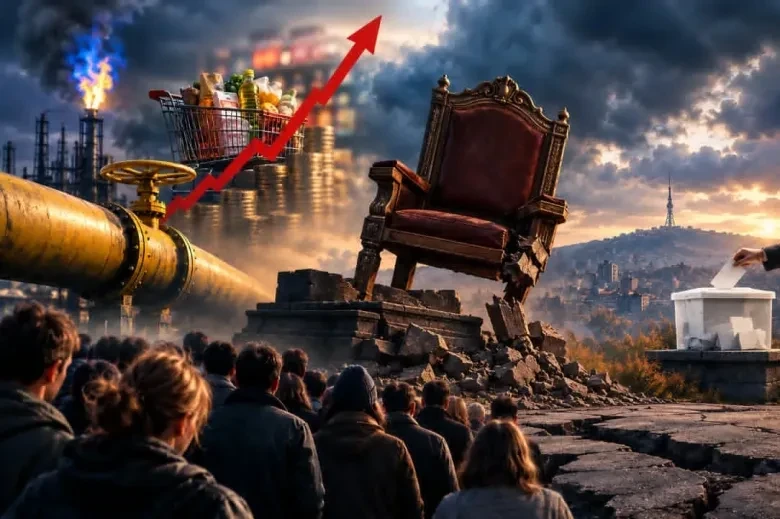
The "Past" newspaper writes: "Armenia has today entered a phase where simultaneous pressures from various fronts threaten to undermine the foundations of statehood. The country's economy faces the imminent disaster of a possible increase in the price of Russian natural gas, which will inevitably lead to cascading price hikes for goods and services, pushing society and the economic system towards complete collapse.
At the same time, on the foreign policy front, the uncertain, foggy, and day-by-day fading future of the peace process, as well as the most serious security challenges in the country, are creating deep apocalyptic sentiments. Society lives in an undeniable atmosphere of crisis and uncertainty, where social discontent has reached its critical peak.
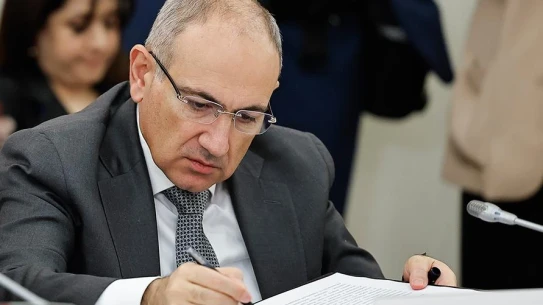
Against this backdrop, outside the courthouse, in a conversation with journalists, Samvel Karapetyan, president of the "Strong Armenia" party, addressed the urgent problems in the country. He specifically stated that a possible increase in gas prices directly stems from the Prime Minister's way of working, which, in essence, negotiates not to prevent the price rise but to raise it, aiming once again to impoverish the Armenian people who are already in socially difficult conditions.
According to Karapetyan, this also has political calculations, as the main electoral base of the authorities today consists of communities and people where the poverty rate exceeds 50 percent.
Referring to internal political developments, Karapetyan emphasized that the October 25 local self-government elections were, in fact, a defeat for the ruling force. He added that the authorities’ claims that the opposition was crushed are absolutely bankrupt, and these elections resemble a political "obituary," after which an inevitable change of power process will begin within a few months.
Speaking about a possible early parliamentary election, Karapetyan expressed skepticism about their implementation, recalling that the authorities managed to secure about 49 percent of the votes only by previously spending huge—approximately 1 billion dollar—resources.
He emphasized that what Armenia needs today is not merely an opposition-led power change but a systemic power change, because the country requires exclusively state-oriented authorities, in opposition to forces incapable of facing external challenges. At the end of the conversation, Karapetyan expressed confidence that even in the event of an early election scenario, the victory would be theirs.
Summing up the situation, it becomes clear that Armenia faces a resolution where economic pressures and political inaction threaten to turn into an irreversible state catastrophe.
The expected rise in gas prices is not just an economic indicator; it is a bomb of social explosion and the final impoverishment of society, deepening the deficit of trust in the authorities. The political fermentations, the local elections results, and the harsh assessments by opposition figures indicate that the existing system is no longer capable of managing the crisis or offering society a reliable vision for the future.
The socio-economic and political background created in the country proves that with superficial steps or short-term manipulations, it is no longer possible to contain deepening discontent, and public demand increasingly clearly formulates the necessity for radical and state-centered changes.
More details in today's issue of the newspaper