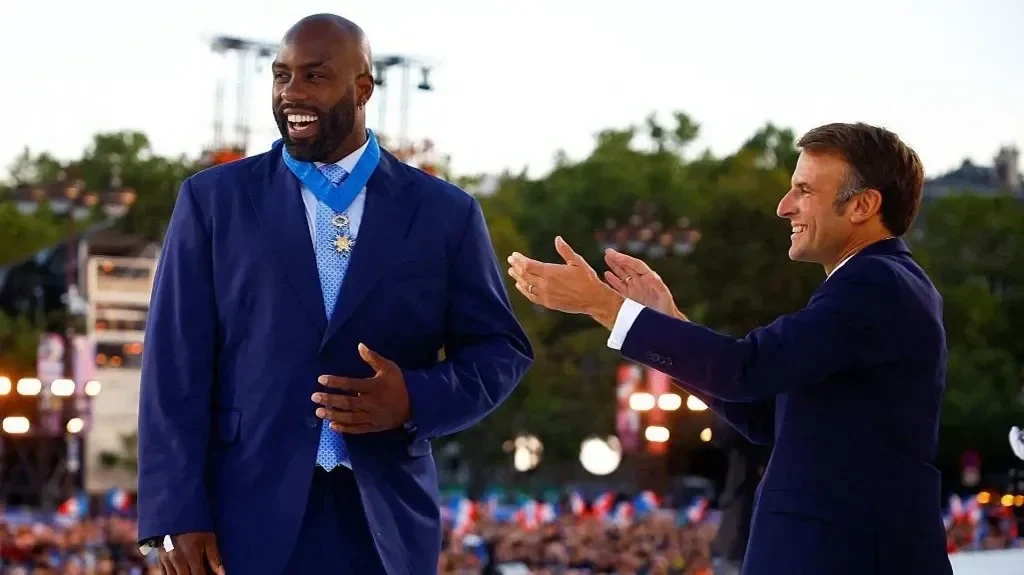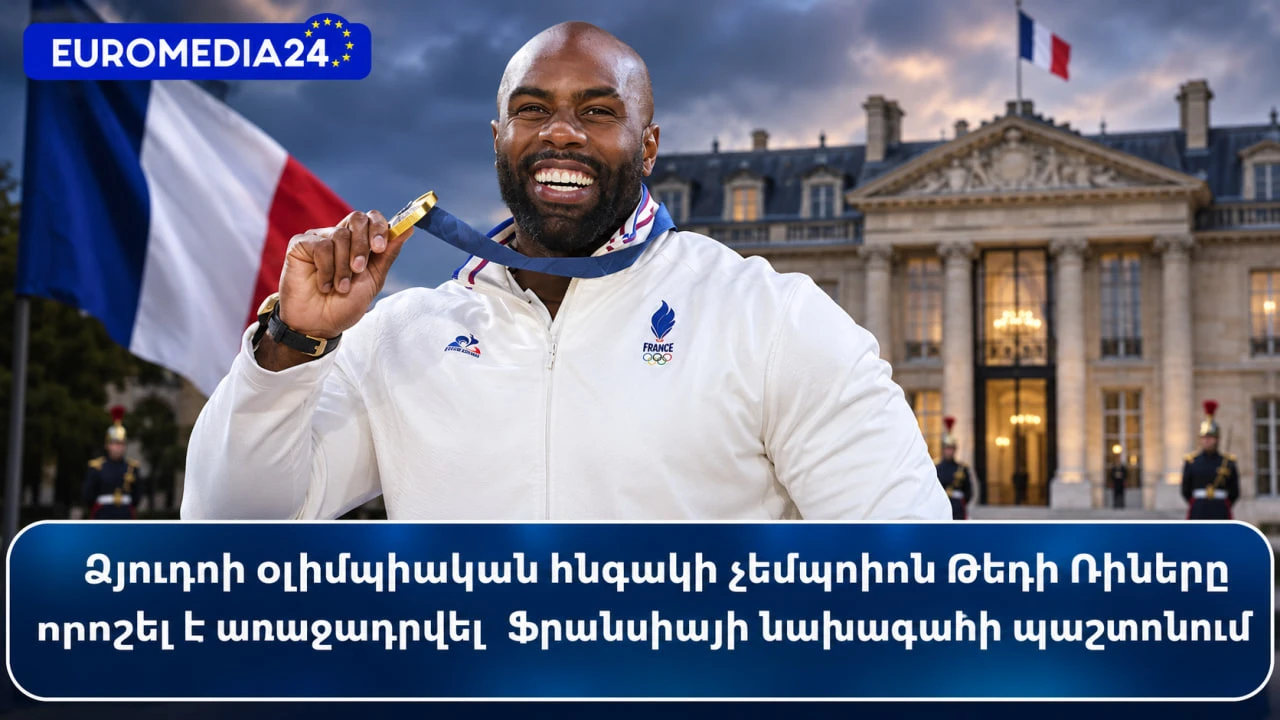
Five-time Olympic judo champion Teddy Riner has announced his intention to participate in the 2027 presidential elections in France, BBC News reports.
The 37-year-old athlete currently lacks both a political party and experience in public service, as well as a comprehensive electoral program. However, his popularity has already forced French politicians to take the potential competitor seriously.
Born in Guadeloupe, Riner has presented his initiative under the slogan "The France We Love." In a message posted on social media, he stated his intention to unite the country, improve citizens' welfare, and oppose racism and street violence. As part of the campaign, the athlete also visited one of the hospitals in the Saint-Denis department north of Paris.
The video of Riner’s announcement has gathered tens of millions of views on Instagram and X. According to a survey conducted by Ifop within one day of the publication, 22% of respondents said they might vote for him.
Riner is one of France’s most decorated athletes, holding five Olympic gold medals and 11 world championship titles. He is also involved in business and regularly ranks among the country's most famous public figures.
At the same time, experts caution that athletic fame alone does not guarantee political success. Guillaume Tabard, a commentator for Le Figaro, notes that the lack of connections with the political elite is not an obstacle to participating in the presidential race but does not ensure victory either.
Riner’s entry into the political arena coincides with a crisis among centrist forces in France. Against the backdrop of the weakening political center, representatives of both the far right and far left are consolidating their positions. The far-right leader Marine Le Pen and the left-wing "Unbowed France" party head Jean-Luc Mélenchon are viewed as likely candidates for the second round of the elections scheduled for May 2027.
Riner presents himself as a candidate who belongs neither to the left nor the right. According to the BBC, his views on economic and social order tend to lean toward the center-right. At the same time, the athlete stands against racism and criticizes political extremism, primarily associated with Le Pen’s camp.
However, the centrist field is already overcrowded with candidates. These include former Prime Ministers Édouard Philippe and Gabriel Attal, socialist Raphaël Glucksmann, and center-right Republican representative Bruno Retailleau. European Central Bank President Christine Lagarde, whose term ends in February 2027, is also considered a possible contender.
Riner’s candidacy could further splinter centrist voters' support and increase Mélenchon’s chances of reaching the second round. The politician himself welcomed the judoka’s decision, commenting that the "neither left nor right" formula usually means a lack of leftist views.
President Emmanuel Macron, in turn, called Riner a great champion and emphasized that politics should not be solely the domain of professional politicians. However, the athlete warned against attempts to link him with the current president, stating that he is neither Macron’s emissary nor his supporter.
The main question remains open: will Riner be able to translate his popularity as an athlete into real political support? For that, he needs to clarify his stances on key national issues—pension reform, education, cost of living, public debt, and Russia’s war against Ukraine—as well as to build a team and present a concrete program.
Even if his campaign is short-lived, the emergence of such a candidate itself indicates how unstable the political landscape in France has become. However, if Riner truly intends to fight for the Élysée Palace, he will have to master far tougher rules of engagement than the bouts held on the tatami.