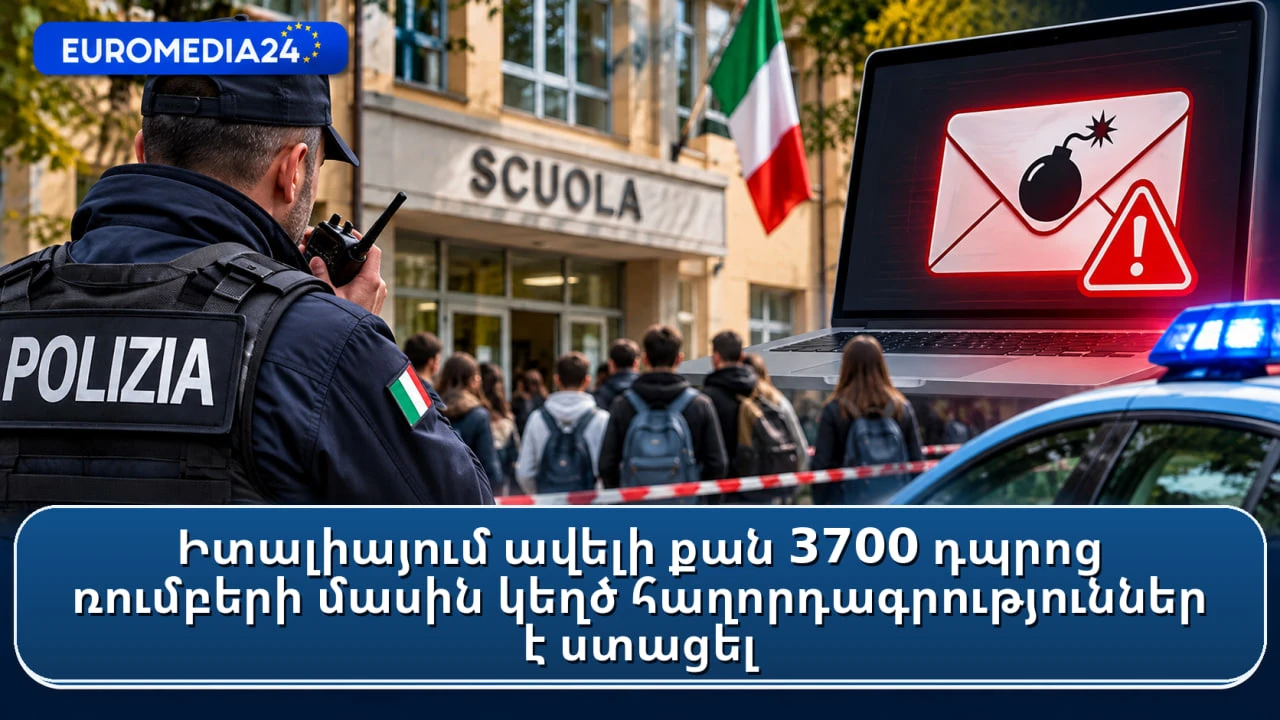
On Thursday, November 12, more than 3,700 schools in Italy received false messages about bomb threats, but the majority of educational institutions continued operating. This occurred as Giorgia Meloni's government advised evacuating public buildings only if there are concrete signs of real danger, Reuters reports.
According to the Prime Minister's office, on Thursday threats were received by 3,778 schools, but evacuation was required in only 77 of them. In some cases, students and staff returned to the buildings shortly after.
The volume of messages the day before was even larger; they were sent to about 6,300 schools, and classes were canceled in several regions. This caused concern among parents.
Amid repeated threats, Meloni invited opposition leaders to discuss response measures. The government plans to develop a special protocol to minimize the consequences of such incidents.
"People should not be evacuated from buildings unless there are concrete signs of real danger, aside from the mere fact of receiving a mass-distributed email," the Prime Minister's office statement said.
As on the previous day, the messages were signed under the name "Mikhail Andropov" and contained threats directed personally at Meloni.
Fake messages about bomb threats have become part of a series of similar incidents and cyberattacks that recently targeted supermarkets, blood banks, air traffic control systems, and media outlets in various European countries.
Some European officials suspect that Russia may be behind the campaign aimed at destabilizing the daily life of European countries supporting Ukraine. However, Italian authorities have yet to present evidence of Moscow's involvement. Moscow denies the accusations and states readiness to assist the Italian side in uncovering the organizers of the message dissemination.
The government's decision has been criticized by the opposition. Former Prime Minister Matteo Renzi stated that the threats could have been prevented or neutralized in time through effective protection against cyberattacks. Opposition parties simultaneously accused the government of insufficient investments in cybersecurity and paying excessive attention to traditional weaponry.
Similar messages were also received by schools in Scotland, Northern Ireland, and Ireland. Local authorities considered the threats contained within them to be fake and allowed classes to continue.