




"This whole process of closing schools is related to costs. more than 90 percent of those teachers will lose their jobs." "Fact" "Fact" daily writes: "A third of the 1,400 schools in Armenia, a little more than 400, have less than a hundred students.
Out of 400, approximately half, about 230, were separated and budget savings were planned. This whole process of closing schools is about costs.
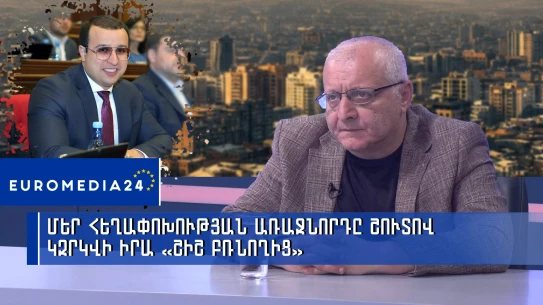
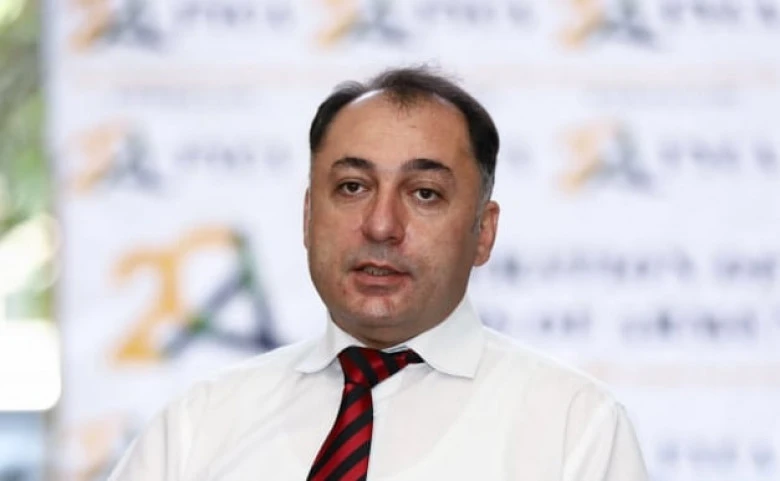
In order to optimize costs, they thought that it is possible to take all the children and concentrate them in a few schools," says Atom Mkhitaryan, the coordinator of the educational and cultural committee of "HayaKve", an expert in the field of education, when we refer to the government's decision to close schools in marzes. He gives concrete examples. "The most disastrous situation is in Syunik and Shirak.
The number of settlements in Amasia extended community of Shirak marz is 26. In the last seven years, schools have been closed in seven of those 26 settlements. As of now, there are 19 village schools, and the students of the remaining seven attend schools in neighboring villages.
Now, with this program, it is planned to leave only four of the schools in those 19 villages, which means that the students of the remaining 15 schools will also start attending schools in the neighboring villages. This is simply unacceptable. It means losing those settlements, because in the seven villages where the schools have already been closed, the population has decreased, roughly divided.
Most of them just moved with their families from Amasia to Gyumri. We say that this process will be accelerated if the schools in the remaining settlements are also closed. The rationale for closing schools is essentially financial, because with a small number of students, we have many teachers and they are paid full time.
According to the relevant decision, starting from 2023, even if the number of students and classes is small, teachers should still be paid full-time, and this has increased the costs of small schools. We think that it is better to spend a lot, to keep the school, than to close it.
In addition to teachers, the school has additional staff who will also lose their jobs. Let's talk in the language of numbers. 229 closing schools now have 2310 teachers and about 2400 support staff. The number of students studying in those 229 schools is about 8,700. It turns out that these infrastructures will be destroyed. It is said that the teachers will be transferred to the schools of the neighboring villages, but it is clear that they will not be needed that much in those schools.
The students transferred from the closed schools will fill the existing classes, no new class will be opened for them. This means that a significant number of teachers, more than 90 percent, will lose their jobs.
As a result of this, social issues will also become complicated, especially in border and high mountain settlements," our interlocutor notes. "HayaQue" has its own proposal on what should be done. "Our proposal is as follows: do not touch the elementary and middle school. Even if there are 20 or 30 students, it doesn't matter if the elementary and middle schools are kept, that is, until the 9th grade, children must attend school in their place of residence. And in the case of high school, concentration is even effective.
It will enable children to attend classes in large settlements. This concentration and optimization can be organized in the case of high schools. In developed countries, high school is organized centrally, which enables children to make professional choices, and also prepares them for university life.
It is difficult for a child to go from a school in a small village to a university and a very large environment. It would be good for children to spend that intermediate part in enlarged high schools. In this way, the effectiveness of education will also increase.
In this case, not 229 schools will be closed, it will be concentrated in, say, 50 schools, but there will be large high schools, which will give our children very good opportunities. Languages will be taught, they will communicate with each other, and the quality of education will improve," the expert adds. School is followed by university education, where every year we record a decrease in the number of students due to various reasons.
And if the demand for several specializations is high, there are also many that have ceased to be attractive to young people in general, and it is important for the state to have specialists in these specialties.
Mkhitaryan says: we need to make radical changes in terms of university and university education. "First of all, entrance exams should be abolished altogether, and admission should be left to universities, as they do in developed countries.
Universities announce the minimum threshold by which an applicant can be admitted to universities based on school exams or accumulated credits. Secondly, education in state educational institutions should be made free, that is, by order of the state. This is not related to very large sums of money.
In the last ten years, the number of students has decreased from 100 thousand to 70-75 thousand, about ten thousand of them study under the state order, fifty thousand - in non-state universities. It turns out that we are talking about the rent of 55-60 thousand students. It is about 25-30 billion drams per year.
If we compare it with the amount of annual bonuses, which is approximately 7 billion drams, it turns out that it is possible not to pay bonuses to political officials for several years, and this will close the issue of providing free education in our universities. We have aspiring children, especially in schools in small settlements, and it is especially the graduates of those schools who cannot get their desired education in Yerevan, in universities, because they have social problems, or even if they are admitted to a university, they have to work at the same time in order to be able to pay for their education.
A small amount of our GDP is allocated to education, up to 3 percent at most. In normal countries, it is 7, 8, 10 percent. It is necessary to increase the expenses of the state budget in the field of education. At least 5 percent of the GDP should be allocated to education. I think that in the run-up to the upcoming elections, all those people who are concerned about education should demand that all political parties participating in the elections have in their programs the question of allocating at least 5 percent of the GDP to education.
In that case, we will solve all the problems within one or two years," he says. One of the innovations made by the authorities in the field of education was the certification of teachers. According to the expert, time has shown its ineffectiveness.
"Nothing significant changes in the lives of the teachers who participated in the certification process, the quality of education continues to decline, and bad phenomena characteristic of our society appear, in particular, corruption. In many cases, the subjectively prepared tests lead to the fact that the test makers have the opportunity to provide teachers with the tests in advance through certain channels, one can say they sell them.
It became evident on a recent example. There was a typographical error in the tests. For example, the answer to the problem should have been 100, but 10 was printed, and it turned out that exactly half of the participating teachers wrote the answer as 10. The second bad phenomenon that appeared, participating and high scoring teachers started practicing with other teachers for money.
Teachers who are going to take the test look for and find teachers who have passed the test with high scores, pay them to practice with them and pass the test. It is already a very common phenomenon, and all this, unfortunately, does not have any effect on the quality of education.
It turns out that teachers practice in order to pass the tests, the time they devote to it is not devoted to their professional development, curriculum development, working with children, that is, it has the opposite effect.
This vicious system is already taking root in our society, doing all this with money and training at the expense of real education", concludes Atom Mkhitaryan.
Lusine Arakelyan
Details in today's issue of "Past" daily