




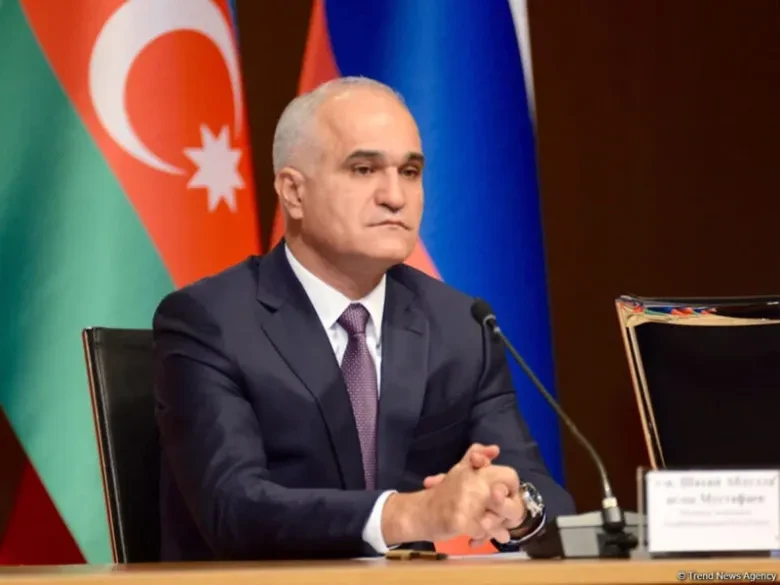
"Zhoghovurd" daily writes: "The visit of the delegation to Armenia led by the Deputy Prime Minister of Azerbaijan, Shahin Mustafayev, first became known not from Armenian official sources, but from the publications of Azerbaijani media. Then the Armenian side confirmed that the Azerbaijani delegation is in Armenia, and later it became clear that the 13th session of the Armenian-Azerbaijani border demarcation commissions was held in Aghveran.
According to the official message, on April 29, 2026, the session of the state border demarcation and border security commissions between Armenia and Azerbaijan was held in Aghveran, under the co-chairmanship of RA Deputy Prime Minister Mher Grigoryan and Azerbaijani Deputy Prime Minister Shahin Mustafaev. The parties discussed organizational and technical issues of demarcation works, agreed and exchanged drafts on the work of demarcation expert groups, the preparation of the demarcation map, as well as the formulation and publication of demarcation documents. The official message also states that Grigoryan and Mustafaev had a private conversation on "issues of mutual interest". In addition, the parties, with the participation of representatives of business communities, discussed issues related to trade and economic cooperation, mutual supplies of goods and services, as well as transit cargo transportation.
However, this is where the main question begins. with whom, in what format, with what agenda and within the framework of what arrangements did the representatives of Azerbaijan meet with businessmen in Armenia? There are no answers to these questions in the official messages. At the moment, the public of Armenia does not know who participated in that meeting, what areas were discussed, whether it was only about possible economic ties or also about transit routes, infrastructures, logistics or other sensitive issues. There are also no details on whether the topics of vital importance for Armenia were discussed: the occupation of the sovereign territories of Armenia by Azerbaijan, the return of Armenian prisoners, the fate of the missing, the facts of the destruction of the Armenian cultural heritage of Artsakh, as well as the aggressive statements from Baku.
All this happens in a situation where the official and semi-official circles of Azerbaijan continue to present different parts of the territory of the Republic of Armenia as "Western Azerbaijan" at almost every opportunity. In Baku's rhetoric, territorial ambitions towards Armenia have not only not decreased, but are often presented as a political agenda. Against this background, the visit of the high-ranking Azerbaijani delegation to Armenia, even without sufficient public clarification, naturally raises serious questions. The most problematic thing is that the Armenian authorities, under the name of the peace process, do not present to the public the full political context of the negotiations. If we are talking about the technical work of the border demarcation commission, then the public should know the principles by which it is carried out, what maps are used, what stage the works are in and whether they do not cause new security risks for the border settlements.
Peace cannot be built behind closed doors without public trust. After all, transparency at the state level is especially important when it comes to the visit of officials from a country that has been at war for nearly three decades and has had hostile relations for nearly three decades. The public has the right to know with what agenda they came to Armenia, with whom they met, what issues were discussed and whether the state, security and humanitarian interests of Armenia were properly presented in those discussions."