





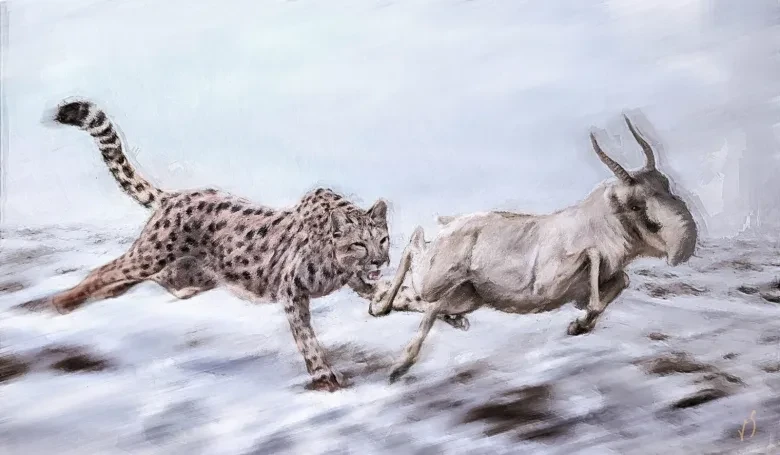
The extinct predator Miracinonyx trumani, which for decades was called the American cheetah, is not actually a cheetah, but a close relative of the cougar. The new study also shows that this unusual predator lived much further north than previously thought, and adapted to life in the Arctic, where it probably specialized in hunting salmon.
The study, by scientists from the University of California, Santa Cruz, was published September 4 in the scientific journal Current Biology. The authors studied ancient DNA and stable isotopes from fossil remains of M. trumani, including specimens found in the Yukon, Canada.
It turned out that the animal’s habitat extended about 20 degrees further north than previously thought. The southern populations, which lived in what is now Wyoming and Florida, were universal predators of temperate zones. Their northern relatives in the Arctic occupied a completely different ecological niche.
According to researchers, the Arctic Miracinonyx could specialize in feeding on migratory fish, primarily salmon. Thus, the same species adapted to completely different conditions and food sources at opposite ends of its vast territory.
Outwardly, M. trumani really resembled a cheetah. It had a slender body and long forelimbs, which could help it move quickly across open spaces. According to scientists, an adult animal weighed about 68 kg, reached a height of about 90 cm, and together with its tail was about 2.4 m long.
However, genetic analysis has shown that the similarity to the cheetah was the result of convergent evolution, a process in which unrelated animals independently acquire similar characteristics in response to similar environmental conditions. Miracinonyx turned out to be the sister species of the modern cougar, and the two lineages diverged about 2.6 million years ago.
The discovery also changes the understanding of the role of this predator in ancient North American ecosystems. For a long time, there was a hypothesis that the American cheetah was the reason for the exceptional speed of the wildebeests. It was believed that these antelopes retained the ability to develop tremendous speed as a defense against a fast pursuer, which later became extinct.
The new genetic data show that M. trumani was a much more versatile predator than previously thought. Like modern cougars, it could use a variety of hunting strategies and obtain a variety of food.
Genome analysis has also revealed possible adaptations to the extreme conditions of northern latitudes. Scientists have identified mutations in genes that regulate circadian rhythms. These could help animals adapt to the unusual light regime of the Arctic summer and winter.
Another unexpected feature has to do with taste. The researchers found that M. trumani, like all the feline lines studied in the study, lacked a functional sour taste receptor gene. Cats are already known for their inability to perceive sweet tastes, but this is the first time that a gene involved in sour taste has been switched off in a feline.
At the same time, M. trumani was not very diverse. The scientists found low levels of diversity in both individuals from Wyoming and animals from the Yukon. However, there was no evidence of strong inbreeding or a sharp decline in population, which usually precedes genetic collapse.
The researchers believe that the species’ genetic diversity has been gradually decreasing over a long period of time. Miracinonyx has existed for millions of years without any signs of a sudden genetic crisis, but the slow decline in diversity may have made it less able to adapt to the subsequent climatic changes of the late Pleistocene.
The authors of the work consider this story another reminder of how deceptive the appearance of extinct animals can be. The name "American cheetah" is wrong in two respects: Miracinonyx was not a close relative of the true cheetah, and, judging by the new data, it did not lead as specialized a lifestyle as previously thought.