





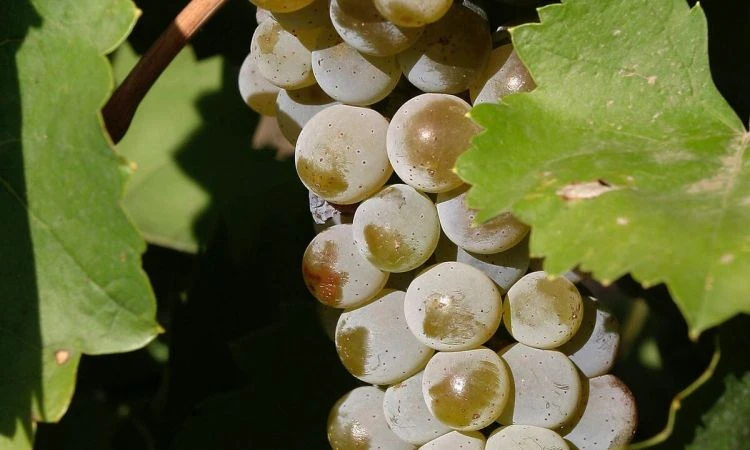
Primorye scientists have discovered a substance in grapes that can stop Parkinson's disease and restore memory without side effects, according to G.B. of the Far East Branch of the Russian Academy of Sciences. Elyakov Pacific Institute of Bioorganic Chemistry.
Parkinson's disease is the second most common neurodegenerative disorder after Alzheimer's disease. It develops when dopamine neurons in a certain part of the brain begin to die en masse. The brain loses its ability to control movement, and patients develop cognitive impairment, depression, and dementia.
"Researchers from the Pacific Institute of Bioorganic Chemistry of the Far Eastern Branch of the Russian Academy of Sciences, together with colleagues from the National Scientific Center for Marine Biology of the Far Eastern Branch of the Russian Academy of Sciences, have discovered that a natural compound obtained from the Alpha grape variety can protect nerve cells from dying in Parkinson's disease. In experiments on mice, a compound known as trans-vitisin B not only improved motor function but also restored memory without the side effects typical of standard therapy," the report states.
Currently, Parkinson's disease is treated with levodopa (L-DOPA), but it only temporarily relieves symptoms by replacing the missing dopamine. Neuron death continues unabated, leading to serious side effects, including involuntary movements.
In laboratory experiments, scientists from Primorye tested the effect of trans-vitisin B on immune cells in the brain. Even at minimal concentrations, it was found to suppress the production of two inflammatory cytokines by 77% and 11%, respectively. It also reduced levels of nitric oxide and reactive oxygen species, which damage cell membranes and mitochondria.
The scientists then began testing a mouse model of Parkinson's disease induced by the neurotoxin rotenone. Animals receiving trans-vitisin B showed impressive results compared to others; they woke up three times more often, recovered almost completely from their pathological inhibition in the open field, and recovered spatial memory in the Y-maze.
However, trans-vitisin B did not cause a decrease in muscle strength in mice. Grip strength decreased by 14% in those receiving the standard therapy, levodopa. It was also found that after a course of trans-vitizin, the number of dopamine neurons in mice was restored by 22%. On the other hand, levodopa had no effect on cell survival; it simply stimulated the activity of the remaining neurons.
Scientists have also found that the substance obtained from grapes suppresses the activation of cells responsible for neuroinflammation. Furthermore, it reduced the number of neurons producing the enzyme that damages mitochondria. The researchers found that trans-vitisin B helps cells maintain protein order, proteostasis, the disruption of which is considered one of the main causes of neurodegeneration. Side effects characteristic of levodopa are not observed.
These discoveries open up new possibilities for the treatment of Parkinson's disease. Scientists will continue to study the material in other models.