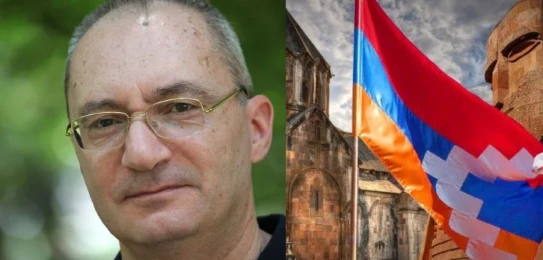






Doctor of political sciences, historian Armen Ayvazyan writes:
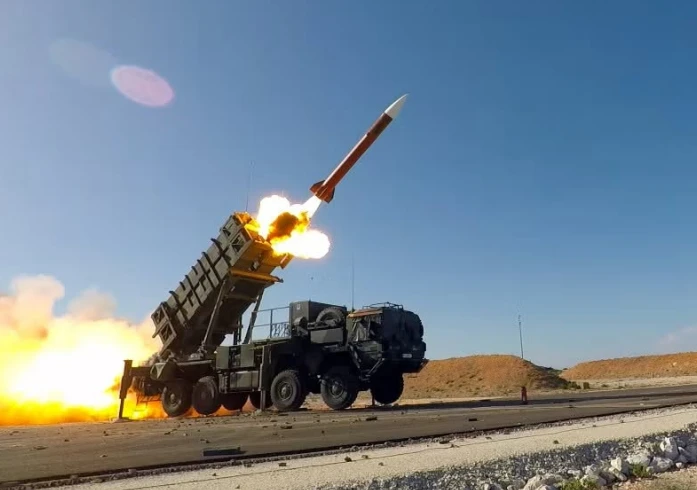
"An interesting article was published in today's edition of the British newspaper The Telegraph, according to which, "Trump backed out of promises to allow Ukraine to produce Patriot missiles, fearing that vital technologies could end up in the hands of Russia" ("The eight-inch radar that could decide Ukraine's fate" article link in the comments field).
Details are also provided about which particular technology's potential leakage causes particular concern. Specifically, "the main problem is related to one of the Patriot's most secretive components, the PAC-3 missile's Ka-band active radar homing warhead. The USA keeps this technology so strictly that it did not allow it to be produced even by Japan, which received a license for the production of missiles and their components back in 2005. Washington would also have to guarantee the security of every business, employee and contractor that would gain access to Patriot's secret technology,” etc.
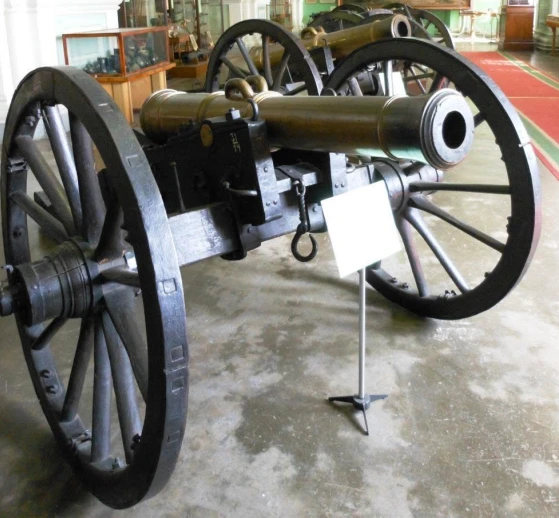
Reading this material, I immediately remembered the 1720s. the ambitious request of the leaders of the Armenian liberation movement to the Russians to send at least 10 master cannon makers, so that in addition to the already organized production of the latest flintlock firearms, in the Armenian Sghnakhrs, Artsakh and Syunik, it would be possible to cast cannons and create the much-needed own artillery. That request was never granted and, as I have explained in detail in my book, most likely for the same reason, fearing that the more advanced Russian cannon technology would fall into the hands of the Ottomans.
Three centuries have passed, technologies have changed beyond recognition, but the logic of strategic calculations of great powers has changed much less. Being an ally still does not mean willingness to entrust the most sensitive military technologies to an ally.
And the main consequence is perhaps this. weak allies often have to face their own fate, because strong ones always have their accounts and calculations.
Below I am publishing a part of my "ARMENIAN ARMY IN ARTSAKHA 1722-1735. From the book "FORMATION, ARMING AND BATTLE" (Yer., 2025), pp. 172-188 (the voluminous scientific apparatus, annotations and explanations are naturally removed).
"Artillery (cannons and grenades) Israel Ori attached great importance to the presence of artillery in the Armenian army to be created. In the plan for the liberation of Armenia, which he created in 1699. presented to the Elector of the Palatinate, Ori even offered to buy with silver all the artillery of the small German army entering Armenia: four six- and two twelve-caliber cannons, as well as one weapon, a short-barreled cannon (French: un mortier, Russian: мортира). Moreover, Ori suggested sending "casting masters to Armenia so that cannons can be cast without interruption", because there are "a large amount of copper and iron mines" there. Unfortunately, that problem was not solved and in the 1720s it became perhaps the weakest aspect of the newly created Armenian army.
Indeed, the Sghnaks of Karabakh and the Davit Bey principality did not have artillery, if we do not count the few samples taken from the Persian and Ottoman troops, which we will look at a little later. The leading figures of the Liberation War considered the lack of artillery as one of the three main strategic shortcomings of the newly created Armenian armed forces and national government, noting with regret that "they have neither a king, nor a treasury (that is, a state institution that manages general revenues and expenses - AA), nor artillery" If the first two of these three big gaps were mainly related to the absence of a unified Armenian central government and management system and the non-existence of state institutions, the third was a fundamental military problem that remained unsolvable. Starting from 1724, the Armenian command of Karabakh tried several times to settle this issue with the help of the Russians, unsuccessfully asking them to send cannon-making masters. Thus, in 1725 In his already mentioned letter of August 16, Ivan-Karapet wrote to Chancellor G. I. Golovkin.
"Here (in Karabakh) they found iron, iron and copper mines. How many times have I written to Your Eminence to send at least 10 masters, but I haven't received a single answer from Your Eminence. Moreover, [here] the forest (I would like to say the wood - A.A.) is enough for everything."
["I found this yellow thing, copper and copper, how many times did I write your order that you should send me Z (10) to the shoulder, and by your order, I will not be deceived, and for everything, you will also pay for everything" (emphasis - A.A.)]
The Russian translation of the letter clarifies that it refers not only to copper and lead mines, but also to the "factories" that process these minerals, that is, factories.
"There are also copper and lead processing factories, only there are few masters. the [request] to send them was written before, but masters have not been sent yet." a) the Armenians asked the Russians for masters, but that request was ignored, b) the Russians promised to send masters, but did not fulfill the promise. The first option seems more likely.
In 1724 On November 5, St. In Petersburg, at the State Collegium of Foreign Affairs of Russia, the representatives of the Karabakh Armenian army also announced that they have no cannons at their disposal, because they do not have cannon-making masters, although there are copper and iron mines. Earlier, in 1724 On February 5, Peter the Great's delegate Ivan-Karapet, head of the Secret Office (Тайная канцелярия) of the Russian government, Count P. A. In one of his reports sent to Tolstoy (1645-1729), he wrote that at that time mining in Karabakh was still very poorly developed.
"In the land of Armenians (now in Karabakh - AA), besides lead, there are many other ores: copper, iron, borax. Only (the Armenians) are not able to increase the number of mines, but whoever needs something, takes the necessary ore and processes it in small quantities for his needs. [In Artsakh] there are also abundant forests."
["On the Armenian side, there are many ores above lead, namely copper, iron, and nitrate, because they don't know how to multiply factories, but whoever needs it, they give that ore and make it for themselves in small numbers, and there is also a lot of forest."]
E. According to Lalayan's folklore information, in the 18th century Karabakh Armenians prepared gunpowder "in Yerishen, where there is cloth (селитра)".
In fact, in the 1720s In Karabakh, gunpowder was certainly prepared not in one, but in several places, especially in fortresses and other points of permanent deployment of troops. Thus, for example, in 1724 in January or early February, Ivan-Karapet visited a mine called Madan, which people used freely.
"There is a lot of garbage in this state, half of it is clean, half of it is garbage. There is too much copper and iron, there is also a lot of shora (borax), and there is also mesha (a type of ore). I went to a [mine] place called Madan, I went around there, but there was no miner. Whoever wants to, melts [the ore] little by little for himself."
["There is a lot of proverb in this country, yep khales, kes ve kes dos gegoi. There is a lot of copper and iron, there is also a lot of cloth, and there is also mesh. I went to the place called Madan, no matter where I came, there was no one who could help me. Little by little, if you want it, where is it going?"]
Nevertheless, judging by the later letters of the same Ivan-Karapet, only 8-9 months after this information, at least in 1725. Since October-November, the local production of weapons and ammunition in the Nagorno-Karabakh region had already taken an organized form and character. Therefore, in that short period of time, the operation of the mines was significantly improved and regulated.
In 1729 On October 21, Tarkhan-yuzbashi, who personally arrived in Moscow from Karabakh to ask for military aid, complained again that the Armenian army concentrated in four separate Sghnakhnirs "does not have any kind of cannons, due to the lack of craftsmen to mold them".
Thus, although the Russians constantly promised to help the Armenians and encouraged them to continue their armed struggle against the Ottoman army occupying most of the Caucasus, they never granted the Armenians' desperate request to send master cannon makers to Sghnak. It seems that the reason for the reluctance or unwillingness of the Russians remained unclear to the leadership of the Sghnaks until the end. In historiography, this problem also remains unexplained.
At first glance, it may seem that the reason for not supporting the Armenians in this key issue is the Russian government's decision in 1724. it was the desire to adhere to the provisions of the Russian-Turkish agreement of June 12. Indeed, the desire of the Russians not to give reasons for hostility to the Ottoman authorities was obvious, but it was not comprehensive and complete. Thus, the Russians did not hesitate at all.
1) To maintain a constant correspondence with the leadership of the Armenian Sghnaks, particularly as early as 1723. through Ivan-Karapet, the imperial delegate sent there in December;
2) create Armenian and Armenian-Georgian squadrons within their Caspian military base;
3) To give refuge to the king of Kartli ("wali") Vakhtang Z and his son Bakur (Muslim name: Shahnavaz Khan), and also send them to the Near Caspian regions with the instructions to encourage and inflame the anti-Turkish resistance in Iran and the Caucasus.
4) later: 1727-1728. to allow the passage of Armenian armed detachments from Poland to the Armenian Sghnaks of Karabakh to help the Armenian army ("...в армию армянсую на помощь", "...в Армянские Сагнаки на помощь Собранию Армянскому").
5) maybe also provide Russian flags to Armenians in order to raise their fighting spirit.
6) As mentioned above, in 1730 on May 21, the Supreme Secret Council of Russia decided to allocate 1,000 rubles per year to the Avan and Tarkhan Yuzbashi who were in Russia at that time, "even if they are not in the Russian provinces, but in the Armenian Sghnakher", that is, their return and participation in the ongoing anti-Ottoman armed struggle in Sghnakher was not excluded, which also corresponded to the wishes and intentions of those prominent Armenian generals.
The actions of Russia listed above, of course, provoked the great displeasure of the High Door, but they did not cause a serious crisis in Russian-Turkish relations. The Russians also gave various ingenious diplomatic answers to the Turks. Thus, in 1721 until 1736 K. In 1730, Ivan Nepleuyev, who served as the Russian ambassador (resident) in Constantinople. On July 26, during a meeting with a high-ranking Turkish official, he truthfully emphasized that the Russian "court has not provided any help to the Armenians of Sghnak today, either with people (i.e., soldiers or troops - AA), money, weapons, or ammunition... the imperial court has not interfered and does not interfere in Armenian affairs, which belong to the jurisdiction of the High Door."
In this context, it was quite possible to secretly send a few cannon casting masters to the Armenian Sghnaks. And if the Turks became known about them, one could simply say that Russia has nothing to do with them, the Armenians themselves "imported" craftsmen, just as, for example, they imported the technology of making flintlock rifles or made flags similar to Russian flags (giving this last answer to the Turks, I. Nepluyev mentioned as an example the pirates of his time, who, according to him, made and used the flags of all kingdoms themselves). Therefore, the main reason for not sending the Armenians as gunners should be found in other circumstances.
It seems that the Russian court did not send cannon-making masters to the Armenian Sghnaks primarily out of concern to prevent the leakage of the secrets of its military industry, i.e. for security reasons. The Russians wanted to exclude, in their opinion, the real possibility of their own cannon production technology falling into the hands of the Ottomans, considering the continuous and frequent military operations of the Ottoman armies against the Sghnaks. Although the Ottoman army had a long experience of using artillery (since 1389), from the second half of the 17th century until the end of the 18th century (including the 1720s we are interested in), the quality of the Ottoman cannons was significantly inferior to the European counterparts, which, in particular, were more mobile and lighter. Count L., who studied the Ottoman army of that period in many ways. He wrote to Marseille. "[The Turks] carefully guard the cannons they find in the Christian cities they have captured, because our cannons are much better in quality. And on the contrary, we always mold their cannons and then make them in our own way." In this regard, by the way, it is necessary to deny a conclusion presented by the English military historian Jeremy Black with an extremely broad scope, according to which, in the 18th century, "in general, only the armed forces of the most developed societies had artillery, because the production of artillery required a branched industrial base for its time and a specialized workforce." It is not like that at all. In the 18th century, the Ottoman Empire's productive forces and means of production were deeply backward, but it still produced a large number of different types of cannons, which were used effectively by the Ottoman army.
However, the Russian government was afraid that the gunners it sent could be caught and captured either on the way to Sghnaks or during the Ottoman military operations against Sghnaks. The Russians showed unnecessary skepticism towards the potential of the Armenian resistance. The Armenian leadership also had its share of guilt in that, since 1722, through envoys and letters, it has been constantly announcing to the Russians about its "imminent" and "inevitable" destruction, if only the Russian army does not come to help soon. It is clear that with such salty messages, the leadership of Sghnakher wanted to speed up the arrival of the Russian army, but as a result, the Russians began to underestimate the general strength and endurance of the Armenian army formed in Sghnakher, which was actually quite high.
Along with all this, reliable information about the cannons used by the Armenian troops of Artsakh, Syunik and Agulis has been preserved in both Armenian and foreign sources. We are talking about, most likely, not locally produced cannons, but warheads captured from Persian or Ottoman troops. It is also not excluded that at some point and in some way the Armenians of Artsakh and Syunik succeeded, in 1722. before or after, secretly purchase and import some small cannon or cannon; let's recall that back in 1709 Israel Ori may have organized the transportation of weapons (including small cannons) from Shamakhi to Artsakh or Syunik..."
But about this on the next occasion.
And those who are interested in these questions can buy the book at "Bukinist" bookstore and its branches.
In the photos:
1. Russian field cannon, early 18th century (Military Artillery Museum of St. Petersburg),
2. The launch of a PAC-3 anti-missile from the American Patriot anti-aircraft missile system."