




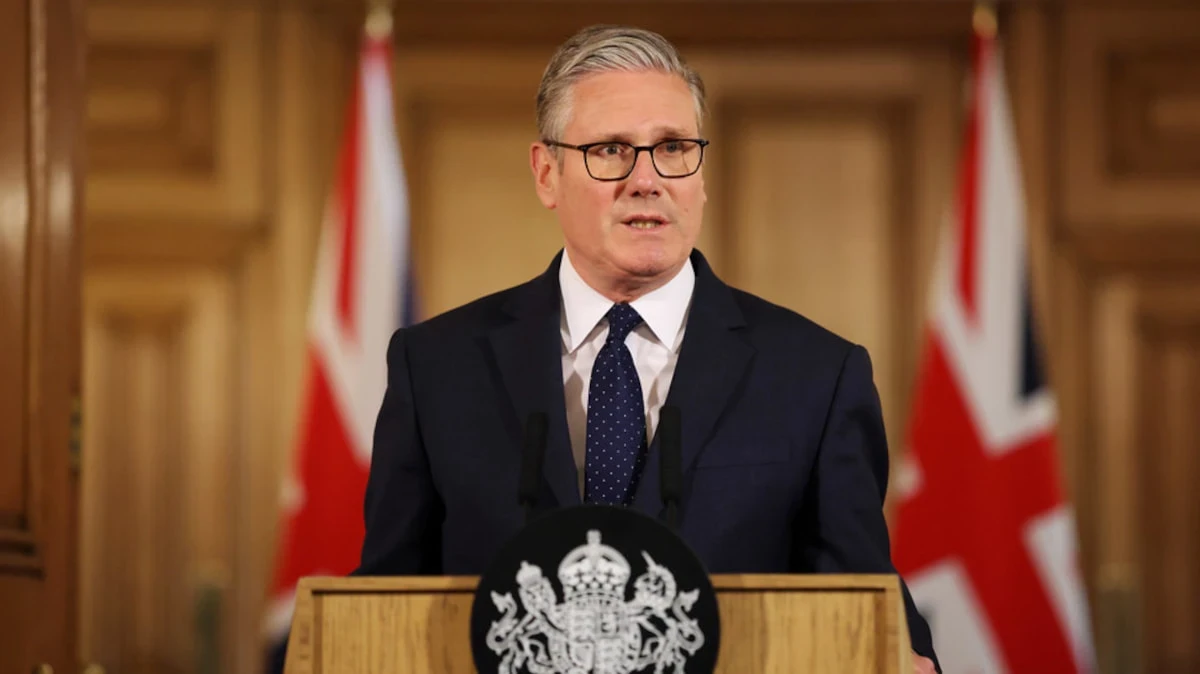
British Prime Minister Keir Starmer has come under pressure after announcing a long-awaited plan to increase defense spending. According to critics, the plan does not include funding sources for all announced measures and may force the next head of government to look for an additional 4.7-5 billion pounds in the first budget, writes The Guardian.
Introducing the plan in the House of Commons, Starmer defended the £298bn defense investment plan despite criticism from both the opposition and the ruling Labor Party. Dissatisfaction, in particular, is related to the reduction of funding for a number of transport infrastructure projects, the funds of which are planned to be directed to strengthening the defense.
According to the plan, UK defense spending would rise from 2.6% of GDP in 2027 to 2.7% of GDP by 2030, which in monetary terms would amount to almost £80 billion a year. Starmer stated that this will enable the country to get on the "trajectory" to reach the level of 3% of GDP in the next parliamentary session.
At the same time, this indicator is still below the NATO goal, which envisages an increase in defense spending of member states to 3.5% of GDP by 2035. As the British Institute of Fiscal Research notes, the document published by the government does not clarify how Great Britain intends to reach that level.
According to the British media, some of the supporters of the mayor of Greater Manchester Andy Burnham (who is seen as one of the possible future leaders of the Labor Party) have compared the program to an "unexploded bomb", because the new prime minister, if Burnham occupies the position, may receive a significant financial gap. Sources claim that Burnham himself was not informed in advance of the alleged funding shortfall.
During the parliamentary debates, the leader of the Conservative Party, Kemi Beydenok, stated that the government presented an insufficiently developed program.
"Even the limited plan he announced has already failed because he didn't find the money to finance it. Five billion pounds short. We all understand that he leaves that mess to his successor," said Beydenok.
At the same time, he called on the government to reduce social spending in order to direct more funds to defense.
In response, Starmer accused the Conservatives of hypocrisy, pointing out that during their time in power the share of defense spending was reduced, while social assistance spending, he said, increased by £88 billion.
"During their fourteen years of power, they reduced defense spending from 2.5% of GDP to 2.3%. And they increased social security spending by 88 billion pounds. Therefore, we do not accept any instruction from them", the Prime Minister stated.
Starmer also noted that the government had already committed an extra £15 billion to defense outside of the Budget and Public Spending Review, and decisions made in the latest budget had secured a £22 billion reserve, which he said would enable funding for similar initiatives.
Moreover, the British Prime Minister did not directly answer the question whether Andy Burnham knew about the supposed funding shortfall of the project. Instead, he stated that the current government has made record investments in defense and security, stressing that "any Prime Minister from the Labor Party would have supported this plan."