





"Fact" daily writes:
In modern Armenian political discourse, a thesis is regularly put into circulation, which is attractive in its emotional tone, but completely bankrupt in terms of political science and law.
We are talking about the opposition's demand to put down the parliamentary mandates or "not to take" them. This thesis is often presented as the pinnacle of principle, when in fact it is artificial, built on public despair and devoid of political content.
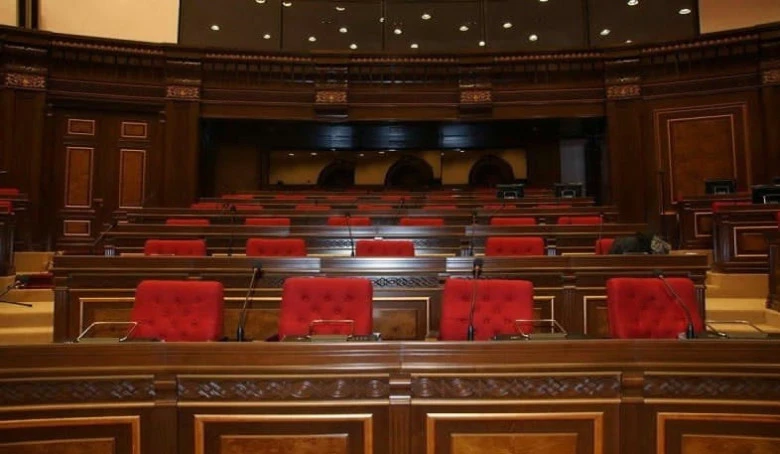
The change of power is not a mechanical or symbolic act, it cannot happen "out of thin air". It is a complex of complex, institutional and legal-political procedures, where the mandate is not a privilege, but a key tool to achieve a change in power.
In any system, the legal threshold for a change of power always passes through the parliament. The dissolution of the National Assembly, the lack of confidence in the government or the change of the prime minister require clear procedures, where the change in the balance of power is a mandatory condition.
By putting down the mandates, the opposition does not weaken the government, but gives it absolute discretion, paving the way for a one-party dictatorship.
Even in the case of the deepest political crises, when the issue of dissolution of the National Assembly appears on the agenda, the role of the opposition remains key in the manageability and legal formulation of that process. There is no simple mechanical change of power in politics.
Even when there is huge public pressure on the street, that pressure needs to be capitalized and given legal form in the halls of parliament. If we look at the events of 2018, it is obvious that despite the great popular pressure and the actual collapse of the current system, the election of Nikol Pashinyan to the post of Prime Minister took place exclusively in the National Assembly, following constitutional procedures.
In the process of the peaceful change of power, several deputies of the majority were forced to vote for the opposition candidate. If there was no opposition faction in the parliament with its existing mandates and the legal possibility to nominate a candidate, the energy of the street would either go into uncontrollable clashes or die out due to a legal impasse. The demand to "put down the mandates" is often generated either by individuals operating in the emotional field, or by the government's propaganda machine, for which it is beneficial to get rid of parliamentary control. What happens after the mandates are put down?
The Parliament does not stop working, it continues to adopt laws and ratify international agreements without any resistance. As a result, the opposition is simply deprived of the podium, the format of official contacts with international delegations, the powers to create investigative commissions and apply to the Constitutional Court.
Voluntary relinquishment of the parliamentary tools of struggle is not a blow to the government, but a voluntary surrender of one's positions. The mandate is not the property of the deputy, it is a legitimate assignment of trust and struggle given by the voter. The change of power requires political maturity, strategic patience and the combination of all possible platforms, both the street and the parliamentary podium.
The topic of not taking the mandates or putting them down is artificial and politically irresponsible, because real political results are not achieved by throwing the tools away, but by using them purposefully and skillfully.
Details in today's issue of "Past" daily