





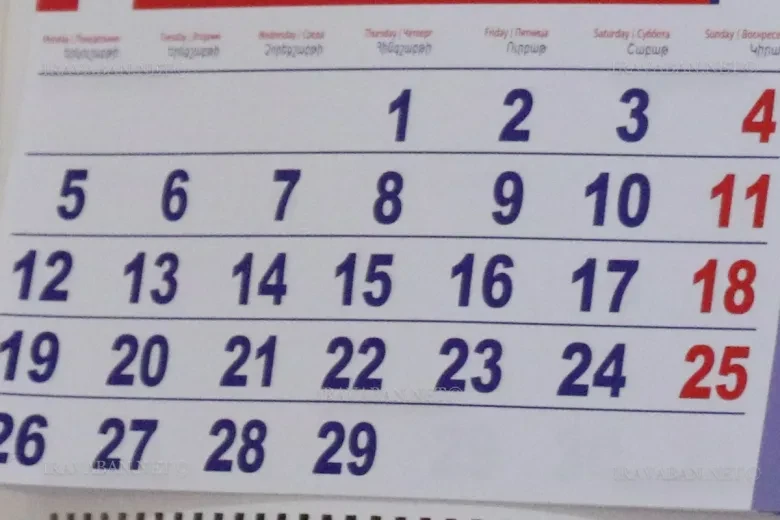
According to the church calendar, the day after the Feast of Five Tabernacles is called the Day of the Dead. For the rest and peace of the souls of the deceased, the Holy Liturgy is offered in the churches, and a requiem ceremony is performed.
That day is dedicated to the memory of those who fell asleep in Christ with true and holy faith, people recall their memory, give mercy to those who miss them. In the Old Testament, in the second book of the Maccabees, Judas Maccabee, anticipating the resurrection of those fallen in war, made a wise move.
He believed that those who fell bravely would receive forgiveness of sins. Judas Maccabeus collected silver and sent it to Jerusalem to offer sacrifices for the sins of those who had fallen asleep (2 Maccabees 12:43-46). Even today, in the Armenian church, believers in the dead mention the names of their dead in writing, so that their names are mentioned in the church at the Holy Liturgy.
This verse read during the funeral ceremony. "Know for certain that unless a grain of wheat falls into the ground and dies, it remains a single grain, but when it dies, it will produce many grains" (John 12:24), once again testifies the following words of the Apostle Paul: "For to me to live is Christ, and to die is to gain life" (Philippians 12:21).
It should be noted that the Monday following Khachveratsi will be a working day.