





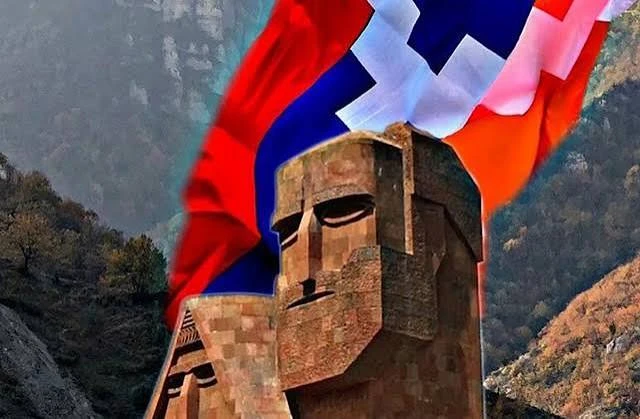
"Zhoghovurd" daily writes: "The cultural policy of the Armenian authorities raises more questions than answers in recent years. On the one hand, the mention of Artsakh, the display of symbols or the presentation of its cultural heritage in state institutions become the cause of pressures and even dismissals, on the other hand, the same state continues to finance Artsakh culture preservation programs with state funds.
This is not just a contradiction, but another manifestation of the duplicity of the state policy. According to informed sources of "Zhoghovurd" daily, the approach continues to prevail in the government circles, according to which any manifestations related to the statehood and symbols of Artsakh should be excluded in state institutions. However, the state documents show a completely different picture. A number of scandalous incidents that happened in recent months are the most telling examples of this contradiction.
One of the reasons for the public discussions surrounding the dismissal of the former director of the Genocide Museum-Institute, Edita Gzoyan, was the fact that she presented a book about Artsakh to the US Vice President JD Vance. Karine Smbatyan, the former director of the Sardarapat school, was fired because she refused to remove the Artsakh flag from the school. And during the exhibition at the Yerevan Music School named after Anushavan Ter-Ghevondyan, the acting director removed from the booth the handmade monument of Stepanakert "We are our mountains" ("Grandma and Grandpa") made by a student.
All this is happening in the conditions when Prime Minister Nikol Pashinyan has repeatedly stated that the presentation of the Artsakh flag, Artsakh statehood or symbols related to it in state institutions does not correspond to the adopted policy of the state. According to him, there will be no return to the ideology of the "Karabakh movement". However, this is where the most important question arises. "Zhoghovurd" daily newspaper received some remarkable information. If the presentation of Artsakh's cultural heritage in state institutions is considered unacceptable, then how is it that the same Republic of Armenia, through the Ministry of Cultural Affairs, allocates state funds to the NGO "Artsakh Culture Preservation Center" within the framework of the 2023-2027 cultural strategy?
Apres Margaryan, the director of the organization, also reminds about this, noting that the protection of cultural rights of forcibly displaced Armenians from Nagorno-Karabakh, preservation of intangible cultural heritage, inventory and transmission to generations were recognized as a state priority by the 2023-2027 culture preservation, development and popularization strategy approved by the RA government. the same state finances the preservation of Artsakh's culture with one hand and punishes people with the other hand for presenting that cultural heritage or preserving its symbols. If the preservation of Artsakh's culture is a state priority, why are the initiatives on that subject punished in state institutions? And if they contradict the state policy, then why does the state continue to finance them from the state budget, that is, with taxpayers' funds?
These questions have not yet been answered. State policy cannot be based on double standards. It cannot simultaneously encourage and punish the same phenomenon, depending on where and by whom it is manifested. Such practices not only create legal and political uncertainty, but also undermine public trust in state institutions. Artsakh's cultural heritage is not a matter of political taste or the dictates of the moment. It is an integral part of the Armenian cultural heritage, the protection of which the Republic of Armenia recognized as a state priority in its strategic documents. Therefore, the authorities are obliged to finally clarify what the real state policy is: the preservation of Artsakh culture or, on the contrary, the limitation of its symbols and manifestations. And in the background of all this, one more important circumstance should not be ignored.
While the Armenian authorities continue to convey contradictory signals to their own society, Azerbaijan is consistently destroying the Armenian cultural heritage in the occupied Artsakh. According to various international and professional assessments, churches, hundreds and even more than a thousand historical and cultural monuments were destroyed or seriously damaged, and a number of settlements were completely destroyed. Under these conditions, it becomes even more unclear why the issue of preserving Armenian cultural identity is sometimes not perceived as a state priority in Armenia, but as a problematic or unwanted phenomenon.
Details in today's issue of "Zhoghovurd" daily.