





"Fact" daily writes:
In the political agenda formed under the name of the regulation of economic relations between Armenia and Azerbaijan, the possible opening of borders and the restoration of regional communications, the existence of commercial ties is often presented as a proof of the progress of relations.
The logic seems simple. if previously there was almost no legal trade between the two countries, and now there are already facts of the import of goods, then it seems that the hostile relations are gradually transformed into economic cooperation. This interpretation (of course, official), however, misses an important difference. the mere existence of trade still does not mean balanced economic interdependence. And the trade data of 2026 show not a formed system of mutual integration, but a highly disproportionate relationship.
The main direction of the trade flow is from Azerbaijan to Armenia. the export of Armenian goods in the opposite direction is either absent or has such a small volume that it is difficult to consider it as a real basis for bilateral trade relations. When one side sells goods to another without equivalent sales in the opposite direction, it is not mutual trade interdependence, but a one-way supply relationship. The difference is fundamental. Economic interdependence implies a structure where both parties have significant markets, supplies, investments or value chains for each other, which creates a certain balance. When the flow in only one direction dominates the relationship, the risk of dependence is gradually concentrated on the importing side. This is the main problem of the Armenia-Azerbaijan trade picture. the available data are more evidence of an asymmetric structure than the formation of mutual cooperation. The most sensitive link of this asymmetry is the energy carriers.
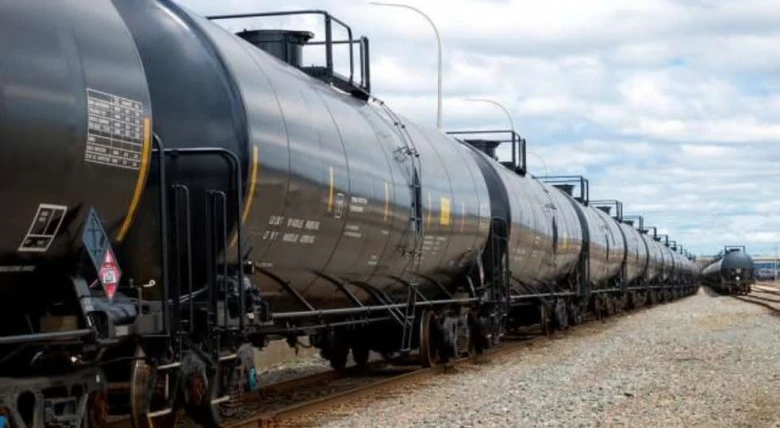
In the structure of the goods delivered from Azerbaijan to Armenia, the goods of energy importance occupy an important place. From December 23, 2025 to July 20, 2026, about 20 million dollars (about 7 billion drams) worth of goods were imported from Azerbaijan to Armenia, including automobile gasoline, diesel fuel and heat-insulating porous plates used in construction. This is not a mere indicator of trade statistics. the commodity structure itself shifts the problem to the level of economic security.
Gasoline and diesel fuel are not ordinary consumer goods. they are widely used in transport, agriculture, construction and logistics, so the stability of their supply can be of systemic importance. If the role of one external supplier in any part of the energy market continues to increase, then even in favorable conditions of political relations, a certain level of vulnerability is formed.
And if that supplier is also a neighboring state with a long history of political and security conflicts, the question goes beyond the limits of purely commercial efficiency. Here, however, one clarification is important. The fact of Azerbaijan's supply of oil products does not mean that Armenia is already economically dependent on Azerbaijan. Such a conclusion would be too drastic at this stage. Dependence should be assessed not only by the fact of importation, but also by the supplier's market share, availability of alternative sources, replacement cost, storage capacity and the period during which it will be possible to replace the given supplier.
In other words, the turnover of 20 million dollars by itself does not prove the large-scale dependence of the national economy, but it can indicate the early stage of the formation of such a relationship, which, if not managed, can turn into dependence in the future. For this reason, the problem should be considered not in the simple dilemma of "to import goods from Azerbaijan, yes or no?", but in the framework of the logic of economic security and supply diversification. How easily and competitively can the given product be replaced by imports from other countries? The lower this substitutability, the higher the probability of forming structural dependence. The necessity of this caution indicates another reality.
In March 2026, "import from Armenia" of $960 was recorded in Azerbaijani statistics. At first glance, this number could be understood as the historical start of exports from Armenia to Azerbaijan. However, the State Customs Committee of Azerbaijan later clarified that it is about roses imported from the Netherlands to Armenia and then sent back to Azerbaijan. According to the methodology of customs statistics, the country from which the product was directly sent was considered a partner country, so it was registered as imported from Armenia. This case shows how careful you should be with the wording "Armenia has started exporting to Azerbaijan", because the statistical registration and the real economic origin of the product are not always the same. A contradictory picture is obtained. while political rhetoric emphasizes the progress of economic relations, the actual structure of trade flows shows that there is no direct export volume from Armenia to Azerbaijan yet. The same logic also applies to building materials.
The import of heat-insulating panels can be a transaction fully justified by market logic, but if the share of one country in the supply of any product continues to increase, it is necessary to monitor not only the import price, but also the competitiveness of Armenian production. If cheap imports put long-term pressure on local producers and lead to reduced production capacity, short-term consumer benefits can turn into long-term external dependence; this is the classic contradiction between supply chain and local production capacity.
It is also important to avoid unfounded predictions. The fact that the import of fuel from Azerbaijan may increase in the future does not mean that Azerbaijan will necessarily turn this connection into a tool of influence. But the logic of economic security is right here. the danger should be assessed not only when it has already appeared, but at the stage when it is possible to take preventive measures.
In this sense, the safest model for Armenia is not "importing as many goods as possible from Azerbaijan", but "developing trade with Azerbaijan to the extent that it increases the overall economic resilience without creating critical dependence on one supplier".