





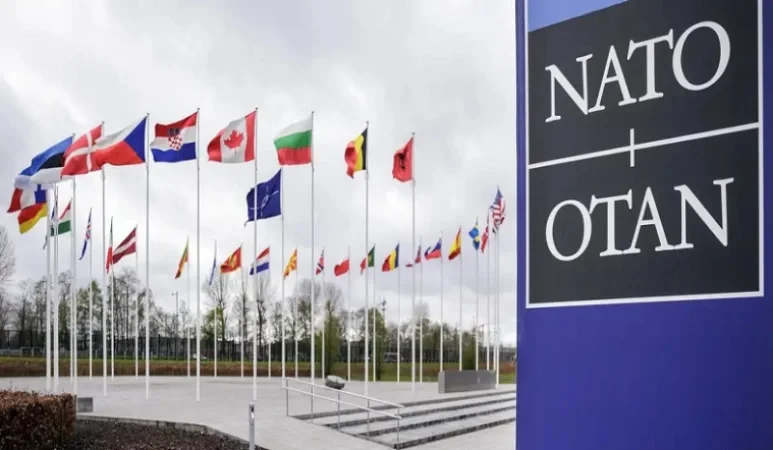
The official of the Russian Foreign Ministry stated that NATO is in the deepest crisis stage throughout its history.
The most serious crisis in the entire history of the structure is being recorded in the North Atlantic Alliance, Director of the Second European Department of the Ministry of Foreign Affairs of the Russian Federation Yuriy Pilipson said in a conversation with TASS.
According to the diplomat's assessment, the aggravation of the situation is a consequence of the deepening contradictions between the most influential member states of the bloc. According to Philipson, it is in this context that it is necessary to consider the discussions on further membership in NATO, which are unfolding in individual states of the alliance.
As an example, he pointed to the initiative of Zoran Stevanovic, the President of the State Assembly of Slovenia, to organize a referendum on the country's future NATO membership along with the local self-government elections in November. At the same time, Philipson emphasized that the implementation of this initiative is still far from becoming a reality.
He clarified that the Slovenian legislation in the defense and security spheres provides an opportunity to hold a consultative referendum, which is essentially a question of public opinion. In addition, according to the Russian diplomat, the practical significance of such a vote remains unclear.
Nevertheless, the appearance of such proposals itself, according to Philipson, indicates serious disagreements within the alliance.
"Public discussions on this topic in countries like Slovenia should be considered, first of all, as a reflection of intra-North Atlantic tensions," he emphasized.