





"Fact" daily writes:
Anti-Russian narratives have been generated by certain circles in our country for years, if not decades. It doesn't matter whether it was about any major economic deal or project, or about armaments or security issues.
Those sentiments, if you like, "moths", have spread and circulated even more intensively, especially since 2018. It is clear that against the background of the foreign political orientations of the power that came to power, the units "living" on that line became more active.
Here, we will not mention in detail the many examples and facts of such manifestations, whether they are about starting a criminal prosecution against the CSTO General Secretary or, for example, about showing certain tax "attention" against companies with Russian capital.
It is also a fact that recently the spread of anti-Russian sentiments continues with much greater momentum. Basically, the Pashinyan government and its satellite forces are trying to create the impression that anti-Russian sentiment has taken serious root in Armenia. It would not be correct to say that they did not achieve any results in their anti-Russian "preaching", but at the same time, various polls prove that in reality anti-Russianism has not taken root among the majority.
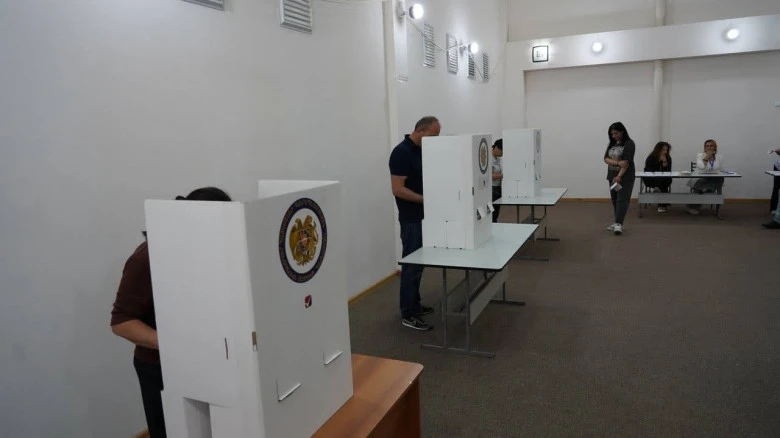
And in this regard, what did the June 7 elections show? What did the results published by the CEC show? In essence, even with these disputed data, Pashinyan and his Communist Party, who are the main ideologues of anti-Russian sentiment, received barely 49 percent of the vote. In other words, they were rejected by the majority.
And that means that the political, economic, social and, in general, all "directions" adopted by Pashinyan and his CP were rejected, including the foreign policy reorientation aspirations. Accordingly, along with all the mentioned "rejections", these elections showed that the thesis of pronounced anti-Russianness did not work either.
Moreover, being a kind of litmus test, the elections showed that most Armenians are strongly opposed to spoiling relations with Russia. After all, if it were as the KP and especially its satellites represent, i.e. if anti-Russianism had taken deep roots, then the KP and Pashinyan would have won more than 50 percent of the votes without any difficulty.
In other words, if the majority of the people had such moods as they persistently try to ascribe to them, then Pashinyan and CP would not need to resort to excessive abuse of administrative resources, they would not need police repression, election and post-election manipulations, or as the representatives of the main opposition forces point out, they would not even need to resort to lies. Let's summarize. these elections also showed that the rumors about the anti-Russian sentiments allegedly forming a majority are also a myth.
It may have its audience, its active segment, but it is neither a majority nor a decisive factor, at present and at least in the foreseeable future.
Details in today's issue of "Past" daily