








"Fact" daily writes:
The nature of modern international conflicts is distinguished by its multi-layeredness, interconnectedness and unprecedented instability, which forms the overall picture of the current global security. The conflicts that regularly break out in different regions and often turn into large-scale military conflicts are not only a direct threat to the population of the states represented in those areas, but also a serious challenge in terms of the destruction of the foundations of the entire architecture of international relations.
Today, the wars that have crossed the borders of classical conflicts in terms of their scale, the diversity of participating parties and the depth of consequences have a dominant place in the international political agenda. The nature of modern international conflicts reflects the fact that they are often interconnected with global processes, economic interests, control of natural resources, immigration pressures, preservation of national identity and the spread of populist ideologies.
The ongoing war in Ukraine has become one of the largest and most geopolitically politicized military conflicts of the 21st century, where not only the interests of two countries, Ukraine and Russia, intersect, but also the key lines of the strategic confrontation between the West and Russia are reflected. This war showed that modern conflicts often rise above territorial disputes or ethnic issues and acquire a global content, including many directions at once, from energy security to information wars and the crisis of international law. The war in Ukraine also highlighted that not only traditional weapons and armies play a major role in modern military operations, but also cyber attacks, information manipulation, economic sanctions and international financial pressures.
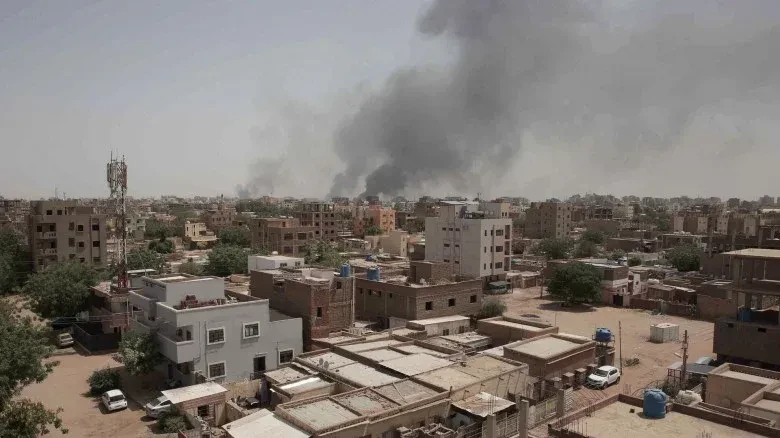
The same description can be attributed to the example of the Sudanese civil war, where the conflict is not only a matter of internal politics and power control, but also a crisis with deep social, tribal and regional roots. The ongoing civil war in Sudan reveals the characteristic feature of modern conflicts that they often become "multi-actor", involving state, non-state, local and external stakeholders, which further complicates their settlement mechanisms. In the example of Sudan, the tendency of intervention of external actors, change of regional power relations and deepening of the humanitarian crisis is evident, which is connected with the unresolved problems of the past.
The ongoing military operations in the Gaza Strip also represent a classic example of a modern conflict that involves not only territorial but also complex substrata of civilizational, religious, identity and sovereignty. This conflict shows that such conflicts often have long historical roots, on which contemporary political, social and regional conflicts have accumulated. In the case of this conflict, the ineffectiveness of international mediation is also evident, the main reason of which is the rigid positions of the parties and the lack of will to compromise. As a result, any phased solution to the conflict that does not include mechanisms of compromise and dialogue is doomed to be temporary, and the risk of periodic resumption of hostilities remains high.
Many conflicts today are still in a "conserved" state, when only one spark is needed to maintain an unstable peace, so that they flare up with a new momentum. Such examples are the decades-long conflict between Armenia and Azerbaijan, as well as the tension between Pakistan and India over Kashmir.
These conflicts are distinguished by their historical depth, the mixture of ethnic and religious elements, interests of great powers and regional security calculations. International mediation efforts have often been aimed at ensuring the manageability of the situation, but in the case of offering deep settlement solutions, they have faced the maximum demands of the parties, perceptions of historical justice and the intractability of identity problems.
In the context of the conflict between Armenia and Azerbaijan, the example of Artsakh clearly shows that military coercion, even if it temporarily changes the geography of the situation, does not solve the essence of the conflict. For years, the OSCE Minsk Group has tried to find diplomatic and compromise solutions on the issue of Artsakh, but it still failed to form such an approach that would be acceptable to the parties. And the use of military force by Azerbaijan and the depopulation of Artsakh became the reason for the dissolution of the Minsk Group format, but the roots of the conflict still exist. In fact, the conflict is not resolved, because we are dealing only with military coercion, which is aimed at the unilateral option of closing the conflict, where the inalienable rights of the Artsakh Armenians were not taken into account at all. And it should not be ruled out that the conflict will rise up again years later, under the conditions of a change in the situation. In such situations, unilateral solutions to contemporary conflicts, even if they give the impression of temporary peace, actually carry a long-term risk of becoming a source of new outbreaks for future generations.
ARSEN SAHAKYAN


