

Euromedia24 on Play Store Euromedia24 on App Sore
BNB

$870.47

BTC

$113082

ADA

$0.868816

ETH

$4608.63

SOL

$213.76

31 °

Yerevan

20 °

Moscow

45 °

Dubai

20 °

London

26 °

Beijing

23 °

Brussels

16 °

Rome

23 °

Madrid

BNB

$870.47

BTC

$113082

ADA

$0.868816

ETH

$4608.63

SOL

$213.76

31 °

Yerevan

20 °

Moscow

45 °

Dubai

20 °

London

26 °

Beijing

23 °

Brussels

16 °

Rome

23 °

Madrid

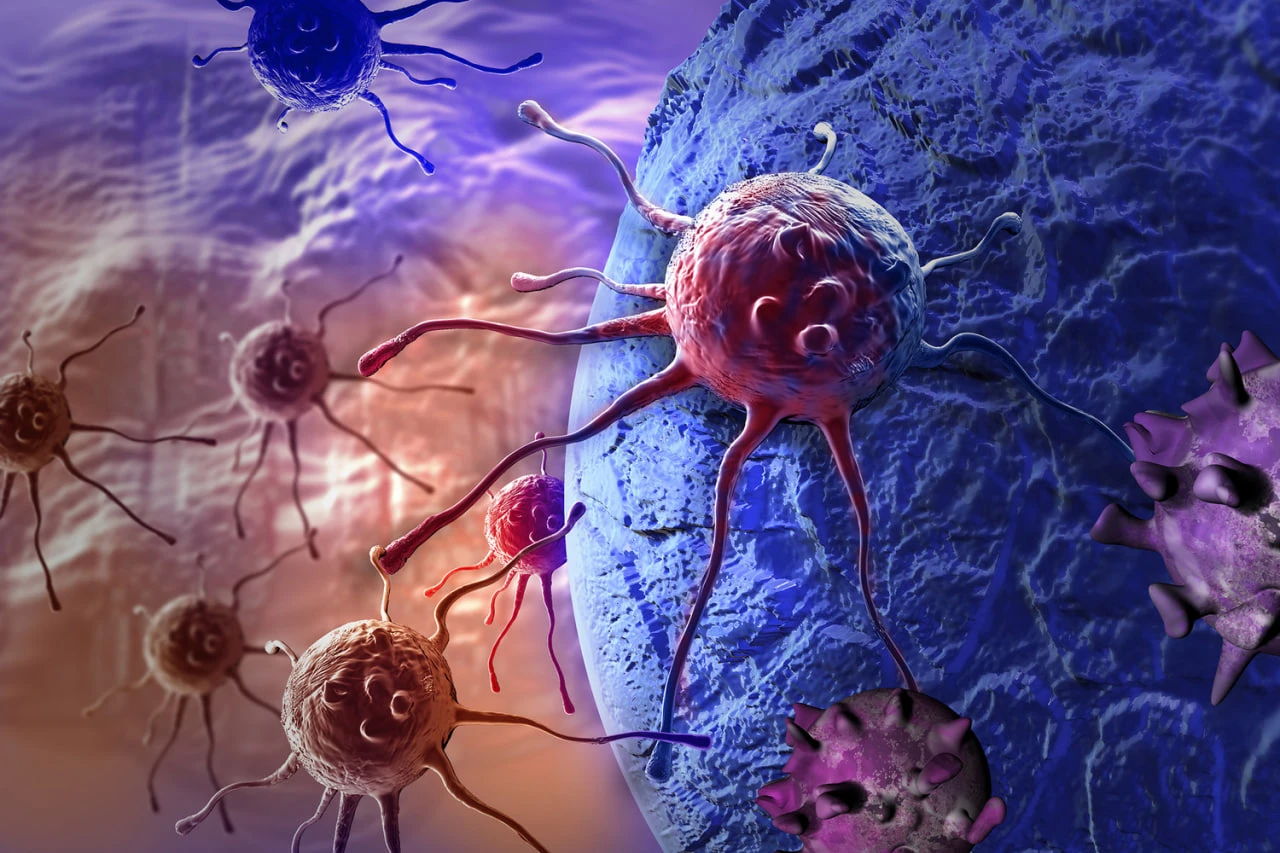
Artificial intelligence has learned to discover markers of invisible disease within the cells


Scientists at McGill University (Canada) have developed an artificial intelligence-based system that can detect incomprehensible molecular markers in the disease in individual cells. The results were published in Nature Communications (Natcom).

Scientists have explained that many diseases leave their "fingerprint" in the form of delicate changes in RNA. These signals can show the existence of the disease, its stage or the body's response to treatment. However, traditional methods often simplify data. They analyze RNA at the whole gene, skipping important information about how gene is active in each individual cell.

The processing of McGill's team allows you to analyze more details on the expression of RNA at the exhibition level, small parts of RNA, which make up the final gene structure. This approach gives a more accurate picture of molecular changes in disease.

"The genes are not built on both solid blocks, but like pieces, like Lego bricks." "Our system, called Dolphin, analyzes how these components are connected and identifying the disease signals, which were previously imperceptible," explains the first author of the study Kylu Song.

During one attempt, Dolphin analyzed the data of individual cells of pancreatic cancer patients and detect more than 800 new diseases that were not found in traditional methods. The system has also been able to distinguish between patients with aggressive and less dangerous forms of tumors.

According to the authors, Dolphin will eventually create "virtual cells". These digital models will replace real cell behavior and their reaction to medicines. This will allow us to predict the effectiveness of treatment before the clinical trials begin.

Translation of: Euromedia24.com

News

The USA will not deploy its troops in Ukraine. Mikael Srbazan was transferred to the Izmir Medical Center (article)
Callas faced an ontological crisis in Europe because of Ukraine. mass media
Beijing has responded to Japan's concerns about China's growing defense budget
Azerbaijan and Armenia are close to signing a peace agreement. Erdogan
The discounting of names by the minister means that he rejects the authority of the leader of the Church
The US has struck three drug-carrying ships in the Pacific Ocean
Ukraine will not recognize Donbas as Russian territory either de jure or de facto. Zelensky
At least 20 people have died in floods in Bolivia
Trump has signed an executive order to classify fentanyl as a weapon of mass destruction
The number of Thai soldiers killed in battles against Cambodia has reached 17. Mathichon
Russia did not betray Syria, what happened there was the internal affairs of the country. Lavrov
The Secretary of the Security Council of Iran discussed issues of the advancement of the North-South Corridor with the Deputy Prime Minister of Russia
Zelensky called the current peace negotiations the most intensive
A student was arrested in Poland on suspicion of preparing a terrorist attack
Lavrov and Iran's Foreign Minister will discuss Iran's nuclear crisis
Putin and Trump have not spoken by phone since October 16
Bild. The Berlin talks failed to clarify Kiev's security guarantees
Iran's Foreign Minister arrived in Moscow to hold talks with Lavrov
Orban: The grandchildren of the Europeans will pay for the aid provided by the EU to Kyiv
Zelensky. The US Congress will vote on security guarantees for Ukraine