





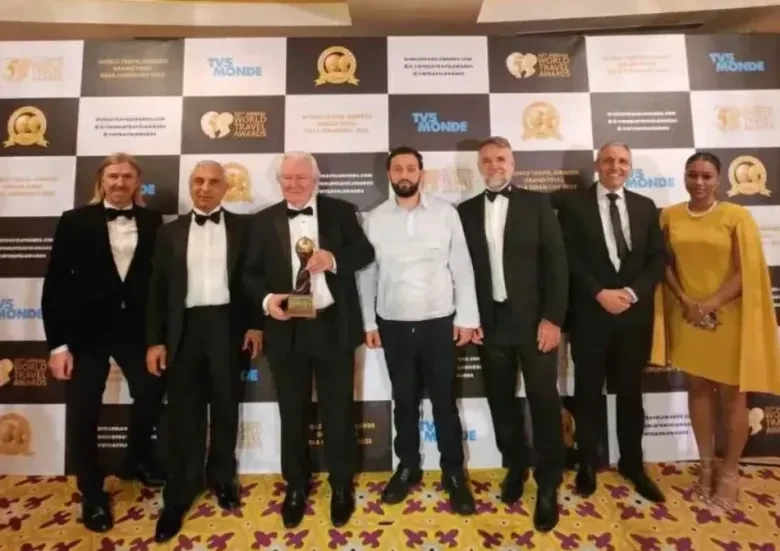
This article investigates the interplay between tourism development and nation branding in Armenia, focusing on The Dvin, a luxury hospitality complex in Yerevan. Nation branding—the strategic promotion of a country’s image (Anholt, 2007)—relies on tourism as a key pillar to shape global perceptions and attract investment. The Dvin exemplifies how elite hospitality infrastructure can serve as a tool of soft power (Nye, 2004), bridging cultural heritage and modern prestige. Through qualitative analysis, this study highlights how such assets amplify Armenia’s visibility and national identity.
Introduction
In an era where global reputation dictates opportunities, smaller nations like Armenia must craft compelling narratives to stand out. Nation branding, particularly through tourism, offers a pathway to reconcile historical legacy with contemporary ambition (Kaneva, 2011). The Dvin, as a luxury complex, epitomizes this duality, blending Armenian motifs with global luxury standards to project cultural dynamism.
The Role of Tourism in Nation Branding
Tourism is not merely an economic sector but a critical instrument in shaping a country’s international perception. According to Anholt (2007), nation branding encompasses six dimensions—tourism, culture, governance, exports, investment, and people—with tourism acting as one of the most visible and accessible entry points for global audiences. Armenia, with its rich historical heritage and emerging economy, leverages tourism to reposition itself from a post-Soviet state to a modern, culturally vibrant destination.
High-end hospitality projects like The Dvin play a pivotal role in this strategy. By offering world-class amenities infused with Armenian aesthetics, such establishments create a tangible representation of national identity while appealing to international luxury travelers. This aligns with Kotler et al. (2002), who argue that tourism infrastructure serves as "soft infrastructure," signaling a nation’s economic and cultural aspirations.
The Dvin as a Soft Power Asset
Nation branding transcends marketing; it is a geopolitical tool (Anholt, 2007). The Dvin’s strategic significance lies in its dual function as both a hospitality venue and a diplomatic platform. Hosting state visits, cultural exhibitions, and high-profile events, the complex embodies Nye’s (2004) concept of soft power, where cultural and aesthetic appeal fosters international goodwill and engagement.
Moreover, The Dvin’s architectural design—a fusion of traditional Armenian stonework and contemporary luxury—mirrors Armenia’s post-socialist transition (Kaneva, 2011). This deliberate aesthetic choice communicates national competence and continuity, reinforcing the country’s brand narrative.
Cultural Diplomacy and Economic Implications
Beyond aesthetics, The Dvin serves as an informal diplomatic node, attracting foreign investors, dignitaries, and cultural influencers. By curating experiences that highlight Armenian craftsmanship, cuisine, and heritage, the complex enhances the country’s soft power while stimulating local economic growth.
This approach aligns with Morgan et al. (2011), who emphasize that destination branding must integrate authenticity with global appeal. The Dvin achieves this by balancing exclusivity with cultural representation, ensuring that Armenia’s national image is not only projected but also experienced firsthand by international visitors.
Conclusion
This study underscores how emerging economies leverage tourism infrastructure as tools for nation branding. The Dvin stands as a noteworthy example within the Caucasus, demonstrating the increasing linkage between national reputation, cultural confidence, and strategic tourism investment.
The case of The Dvin illustrates how nation branding is enacted through physical infrastructure that communicates national competence, creativity, and continuity. The deliberate incorporation of Armenian visual culture—stonework, patterns, and cuisine—within a framework of international service excellence serves as both heritage preservation and strategic branding. Furthermore, The Dvin exemplifies the potential for elite tourism assets to function as diplomatic hubs, attracting global attention and fostering engagement.
Ultimately, Armenia’s investment in high-end hospitality reflects a broader ambition: to position itself not only as a travel destination but as a culturally and economically dynamic player on the world stage.
References
Anholt, S. (2007). Competitive identity: The new brand management for nations, cities and regions.Palgrave Macmillan.
Nye, J. S. (2004). Soft power: The means to success in world politics. PublicAffairs.
Kotler, P., Haider, D. H., & Rein, I. (2002). Marketing places: Attracting investment, industry, and tourism. Free Press.
Kaneva, N. (2011). Nation branding: Toward an agenda for critical research. International Journal of Communication, 5, 117–141.
Morgan, N., Pritchard, A., & Pride, R. (2011). Destination branding (3rd ed.). Routledge.
Author Aghvan Avagyan