





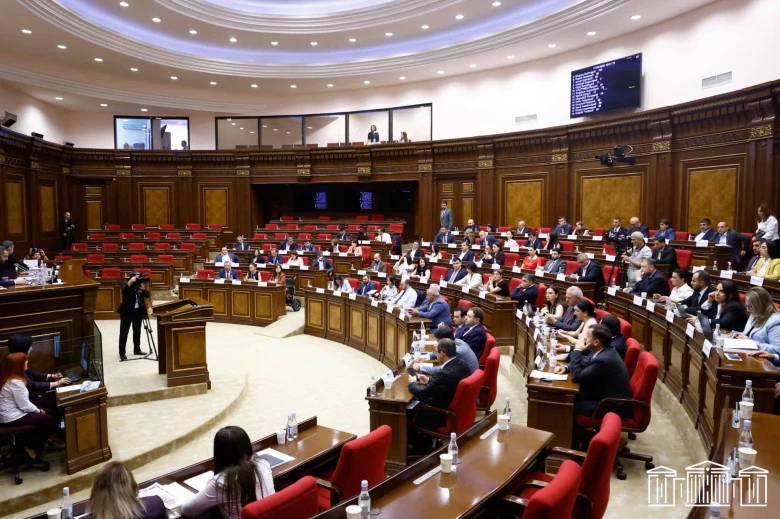
The "Fact" daily writes: These days, in social networks and various media outlets, one can often hear numerous objective and subjective opinions, criticisms and assessments about the work of the new parliament and the parliamentary opposition. However, let's try to rise above emotional discussions and political noise in order to find an objective grain in the public discourse: what is the opposition actually doing in the new parliament, and how effective is their participation in the work of the legislative body? The last parliamentary elections will remain in the memory of political analysts and the public as an unprecedented manifestation of government leverage and a clear abuse of administrative resources.
The electoral process was accompanied by a whole complex of vicious phenomena, starting from the directed pressure of the power system, from the open mobilization of the state apparatus, to the actual appropriation of the votes of the opposition forces, in particular the Prosperous Armenia Party, and the dispersion of votes.
The referrals recorded at the polling stations, the distribution of high bonuses and salaries of major officials during the pre-election period, the targeted expenditures implemented from the state budget and the aggressive manipulations carried out in the information field have created a situation where the established government and the new parliamentary majority are forced to live in the shadow of a serious and deep deficit of legitimacy. However, the political reality records the fact that we have what we have, and it is in this reality that the most fundamental change has emerged. The quality of work and political content of the new parliament sharply and clearly differ from the style of work of the legislative body of the previous convocation. The significant difference became noticeable precisely in the heat of summer, when parliamentary life in the August period, which was considered politically “dead” and passive, not only did not fade away, but also reached the maximum degree of heating.
This was primarily due to the active, calculated and preemptive style of action of the major opposition faction, “Strong Armenia”, which was able to completely transform the logic of political discourse. Unlike the previous parliament, where the peak of political disputes was fistfights, throwing bottles at each other and street-level swearing, in this new situation the opposition demonstrated political maturity.
Despite certain natural tensions and emotional background, the major opposition pole did not go down the path of cheap shows and organized provocations. Instead, the opposition factions dictated completely new rules of political struggle, forcing the authorities to engage in a substantive, reasoned and agenda-based debate.
The result of this new tactic became obvious very quickly. The ruling majority, which was accustomed to talking to the opposition with threats, “taking the fight outside,” “solving issues on the spot,” and waving fists, was taken aback. The language of threats and bazaar tone was simply neutralized and became ineffective, since a serious, prepared, and politically literate opposition put forward new standards against them. The authorities were forced to retreat from street threats, curb their own aggression, and gradually enter a purely parliamentary, civilized arena. The most important thing here is the long-term strategy adopted by the opposition: the goal is not simply to make noisy statements, but to gradually transform the parliament into a real legislative body, befitting a parliamentary country.
By effectively using the levers reserved for the opposition by the Constitution: committee chairmen, parliamentary leadership positions, and oversight tools, the opposition field is trying to have a real impact on the governance of the country and the improvement of the quality of that governance, step by step.
Details in today's issue of the "Fact" daily newspaper