




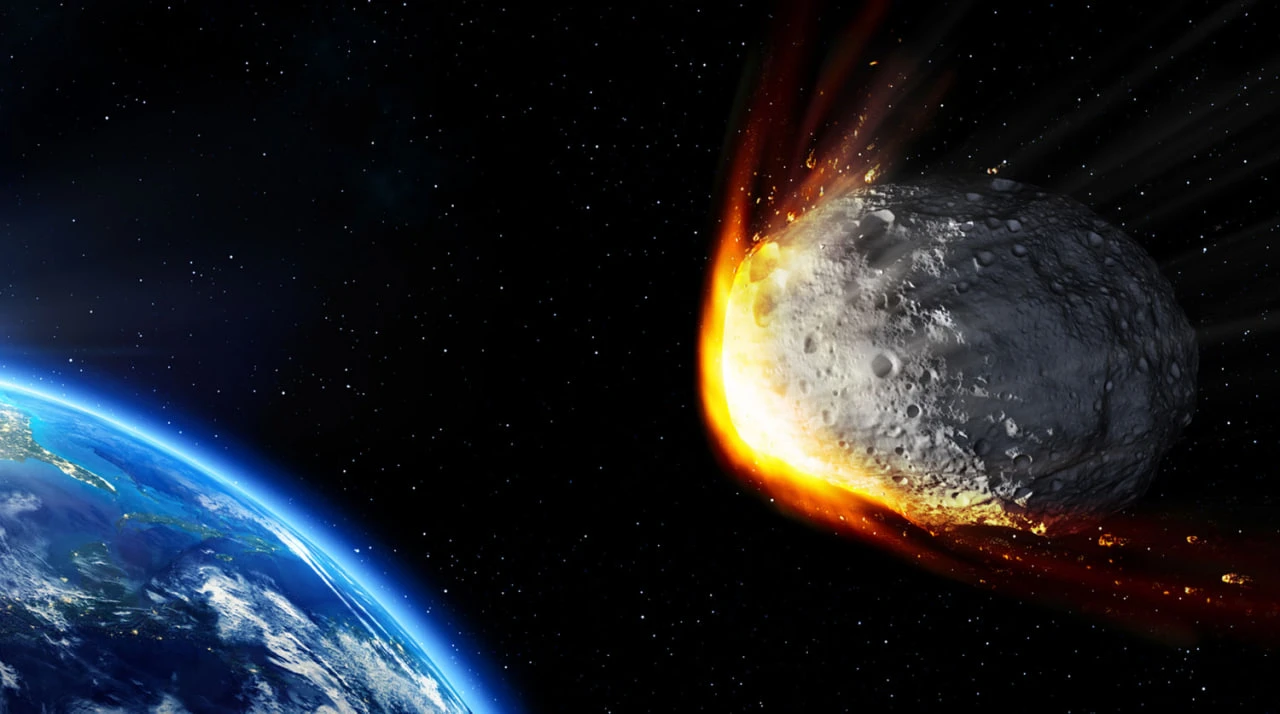
Astronomers at Sao Paulo University in Brazil have found that complete asteroid families can be hidden near Venus, which are practically imperceptible by modern telescopes. The calculations suggest that such bodies may approach the country for several thousand years and even faced with it. The study was published in the magazine "Astronomy and Astrophysics" (A & A).
"Our study shows that there is a population of potentially dangerous asteroids, which we cannot currently find. They are not in the main zone between Mars and Jupiter, but much closer to the orbit around Venus. Because of their position, they remain invisible, although they can make a real threat to our planet in the future, "said Valerio Karuba, the professor at the Faculty of Engineering.
These are the so-called "asteroids of the" formal Venus ". They turn around the sun, but they share the same area of the universe with the planet. Unlike relatively stable Jupiter troys, these bodies are chaotically. Their orbits are highly eccentric, and every 12,000 years are safe from a safe configuration of a potentially dangerous configuration.
With low eccentricism (almost circular orbits) asteroids are particularly worrying. They are the hardest to consider the country, as they are always very close to the Sun. Computer models show that such bodies can approach the country closely, which is equivalent to almost inevitable clashes during the millennium horizon.
"Approximately 300 meters in diameter can create a crater up to 4.5 kilometers wide and release hundreds of megatonna energy. The collision with a densely populated region will be catastrophic, "said Caruba.
Even the powerful devices of Vera Rubin Observatory in Chile will be ineffective. The calculations show that the asteroids of "Venus" will be visible only one or two weeks and only at a height of 20 degrees from the horizon.
An alternative can be the deployment of space telescopes to observe the regions near the Sun. NASA's NEO Surveyor Mission and China Crown Project aim to achieve similar goals.
"The planet's protection must take into account what we already see, but also what remains hidden," said Karuba.
Translation of: Euromedia24.com