





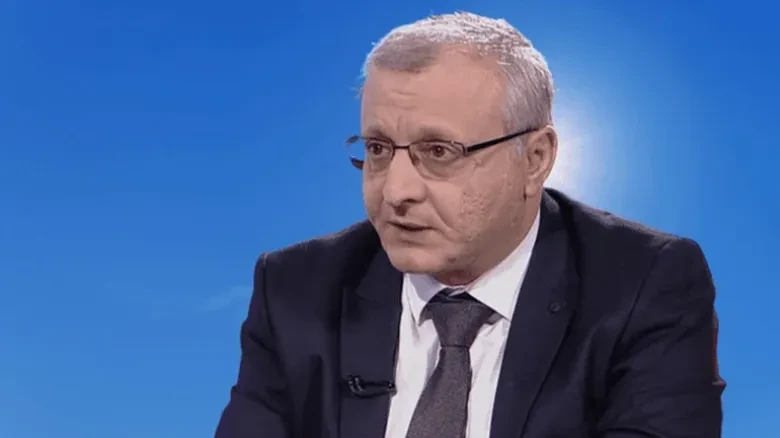
Goble reveals the strategic context of Vance's visit. Political scientist Suren Surenyants wrote about this.
"US Vice President JD Vance is arriving in Yerevan today, starting his regional tour, the next stop of which will be Baku. And while our pseudo-Westerners weave "rosy" legends about this visit and the expected "salvation" of Armenia, we hear such revelations from Washington that only deepen our anxieties. in 2026 On February 4, the interview of presenter Joan Lisosky and American analyst, former employee of the United States Department of State, author of the analytical blog "Window to Eurasia" Paul Goble on the Osmanqizi English channel is an important comment on the political and strategic significance of JD Vance's planned visit to Azerbaijan and Armenia.
According to Paul Goble, Azerbaijan is a key partner for the United States. It is considered as an independent regional power, which has actually gone out of the scope of Russian control. At the core of the discussions with Baku are several strategic directions at the same time: the Iran factor, where Azerbaijan can act as a deterrent and information partner; Zangezur Corridor as a key project for the opening of regional communications,
Limiting China's influence, especially through trans-Caspian infrastructure. In the context of Goble's logic, Azerbaijan is not a state subject to pressure for Washington, but a partner with which transactional and long-term relations are being built. According to Goble, the role of Armenia in the framework of the visit is secondary. JD Vance's visit is a political signal to Yerevan that the United States is not leaving Armenia's agenda. This is especially important in the background of the upcoming parliamentary elections. The visit is also a political insurance factor for Armenia, aimed at maintaining internal stability and the further retreat of Russian influence.
In short, Vance's visit to Yerevan, according to Goble's logic, is more support for Pashinyan's team ahead of the NA elections. One of the sharpest conclusions of the interview is that the war in Ukraine has almost deprived Russia of real levers of influence in the South Caucasus. Moscow can try to intervene in informational or internal political ways, but it does not have enough resources to control the course of regional processes. Paul Goble especially emphasizes that Azerbaijan's recent steps, gas and wheat supplies for Armenia, the release of prisoners and other initiatives, are due to its own interests, and not to direct pressure from the United States. The new constitutional approaches of Nakhijevan and the consistent rejection of Russian legal and political references fit into the same logic.
This idea, in fact, confirms my and other colleagues' claims that Pashinyan's rule is taking Armenia out of the Russian orbit, turning it into a de facto sub-state of Azerbaijan. JD Vance's visit to Azerbaijan and Armenia is a clear expression of the new regional strategy of the United States. Washington seeks to simultaneously manage the risks surrounding Iran, limit the influence of Russia and China, promote transit corridors and strengthen Azerbaijan as a key partner in the region. Q: