




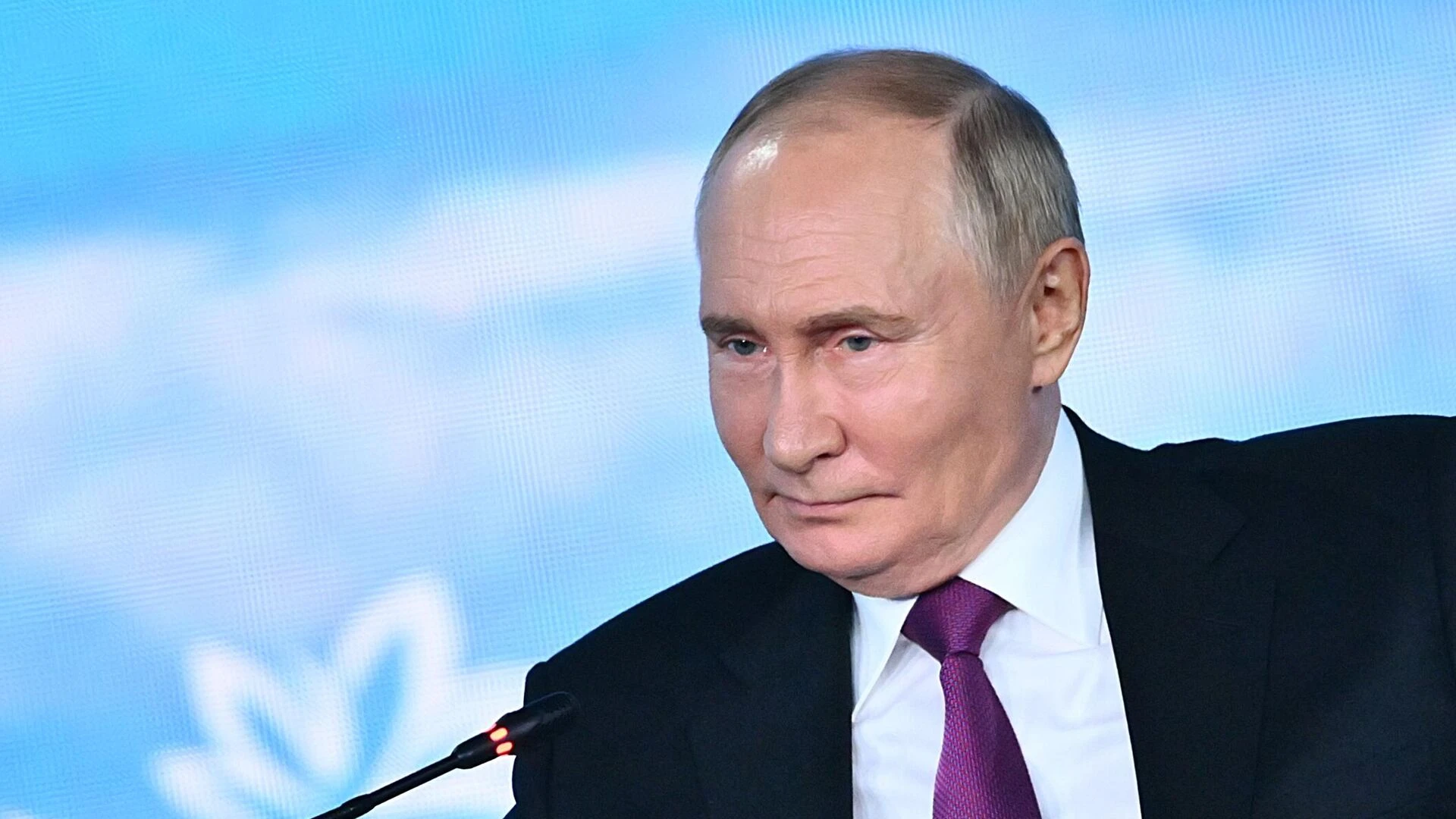
Imagine that you are Vladimir Putin.
The West has dubbed you an outcast for invading Ukraine. Sanctions are aimed at cutting off your country's economy from world markets. And the International Criminal Court has issued a warrant for your arrest. How can you show that pressure does not work? Try holding a summit.
This week in Kazan, President Putin will meet with more than 20 heads of state at the BRICS Emerging Economies Summit. Among the invited leaders are Chinese President Xi Jinping, Indian Prime Minister Narendra Modi and Iranian President Masoud Pezeshkian.
The Kremlin called it one of the "largest foreign policy events in the history" of Russia.
“It is clear that attempts to isolate Russia have failed,” said Chris Weafer, founding partner of the consulting firm Macro-Advisory. “To a large extent, the Kremlin is sending a signal that Russia can withstand sanctions. We know there are serious cracks beneath the surface. But at the geopolitical level, Russia has all these friends, and they will all be Russia’s partners.”
So, who are Russia's friends? BRICS stands for Brazil, Russia, India, China and South Africa. The group, often described as a counterweight to the Western world, has expanded to include Egypt, Ethiopia, Iran and the United Arab Emirates. Saudi Arabia also received an invitation to join
.The BRIC countries account for 45% of the world's population. Collectively, member economies are worth more than $28.5 trillion (£22 trillion). This is about 28% of the world economy.
The West has dubbed you an outcast for invading Ukraine. Sanctions are aimed at cutting off your country's economy from world markets. And the International Criminal Court has issued a warrant for your arrest. How can you show that pressure does not work? Try holding a summit.
This week in Kazan, President Putin will meet with more than 20 heads of state at the BRICS Emerging Economies Summit. Among the invited leaders are Chinese President Xi Jinping, Indian Prime Minister Narendra Modi and Iranian President Masoud Pezeshkian.
The Kremlin called it one of the "largest foreign policy events in the history" of Russia.
“It is clear that attempts to isolate Russia have failed,” said Chris Weafer, founding partner of the consulting firm Macro-Advisory. “To a large extent, the Kremlin is sending a signal that Russia can withstand sanctions. We know there are serious cracks beneath the surface. But at the geopolitical level, Russia has all these friends, and they will all be Russia’s partners.”
So, who are Russia's friends? BRICS stands for Brazil, Russia, India, China and South Africa. The group, often described as a counterweight to the Western world, has expanded to include Egypt, Ethiopia, Iran and the United Arab Emirates. Saudi Arabia also received an invitation to join
.The BRIC countries account for 45% of the world's population. Collectively, member economies are worth more than $28.5 trillion (£22 trillion). This is about 28% of the world economy.
Russian officials said another 30 countries want to join BRIC or seek closer ties with the club. Some of these countries will take part in the summit. There is expected to be a lot of talk in Kazan this week about BRIC representing the “global majority.”
But beyond giving Vladimir Putin an opportunity to shine on the geopolitical stage, what other results could this event bring? Wanting to ease the pressure of Western sanctions, the Kremlin leader hopes to persuade the BRICS countries to accept an alternative to the dollar for global payments.
“Many of the problems facing the Russian economy are related to cross-border trade and payments. And a lot of it has to do with the U.S. dollar,” says Mr. Weafer. “The U.S. Treasury has enormous power and influence over global trade simply because the U.S. dollar is the primary currency for its settlement. Russia's main interest is to break the dominance of the US dollar. She wants the BRICS countries to create an alternative trading mechanism and cross-border settlement system that does not include the dollar, the euro or any of the G7 currencies, so that sanctions do not matter as much.” But critics point to differences within the BRICS. “Like-minded” is not a word that can be used to describe the current lineup.
“In a way, it’s to the benefit of the West that China and India can never agree on anything. Because if these two were really serious, BRICS would have enormous influence,” notes Jim O'Neill, former chief economist at Goldman Sachs. “China and India are doing everything they can to avoid the urge to attack each other. Trying to get them to truly cooperate on economic issues is a never-ending task.”
It was Mr. O'Neill who coined the acronym "BRIC" at the turn of the century for the four emerging economies that he believed should "be at the center of global policymaking." But the four letters took on a life of their own after the respective countries formed their own BRIC group - later BRIC when South Africa joined. They have attempted to challenge the dominance of the G7: the world's seven largest "developed" economies (Canada, France, Germany, Italy, Japan, the UK and the US). It is not only India and China who have differences. There is tension between the two new BRICS members, Egypt and Ethiopia. And despite talk of détente, Iran and Saudi Arabia have long been regional rivals. "The idea that they would all agree in principle on anything fundamentally important is just crazy," Mr. O'Neill said.
And while Russia, fueled by anti-Western sentiment, talks of creating a "new world order", other BRICS members such as India are keen to maintain good political and economic relations with the West. In Kazan, Vladimir Putin's task will be to iron out differences and draw a picture of unity, while showing the Russian public and the international community that his country is far from isolated.
But beyond giving Vladimir Putin an opportunity to shine on the geopolitical stage, what other results could this event bring? Wanting to ease the pressure of Western sanctions, the Kremlin leader hopes to persuade the BRICS countries to accept an alternative to the dollar for global payments.
“Many of the problems facing the Russian economy are related to cross-border trade and payments. And a lot of it has to do with the U.S. dollar,” says Mr. Weafer. “The U.S. Treasury has enormous power and influence over global trade simply because the U.S. dollar is the primary currency for its settlement. Russia's main interest is to break the dominance of the US dollar. She wants the BRICS countries to create an alternative trading mechanism and cross-border settlement system that does not include the dollar, the euro or any of the G7 currencies, so that sanctions do not matter as much.” But critics point to differences within the BRICS. “Like-minded” is not a word that can be used to describe the current lineup.
“In a way, it’s to the benefit of the West that China and India can never agree on anything. Because if these two were really serious, BRICS would have enormous influence,” notes Jim O'Neill, former chief economist at Goldman Sachs. “China and India are doing everything they can to avoid the urge to attack each other. Trying to get them to truly cooperate on economic issues is a never-ending task.”
It was Mr. O'Neill who coined the acronym "BRIC" at the turn of the century for the four emerging economies that he believed should "be at the center of global policymaking." But the four letters took on a life of their own after the respective countries formed their own BRIC group - later BRIC when South Africa joined. They have attempted to challenge the dominance of the G7: the world's seven largest "developed" economies (Canada, France, Germany, Italy, Japan, the UK and the US). It is not only India and China who have differences. There is tension between the two new BRICS members, Egypt and Ethiopia. And despite talk of détente, Iran and Saudi Arabia have long been regional rivals. "The idea that they would all agree in principle on anything fundamentally important is just crazy," Mr. O'Neill said.
And while Russia, fueled by anti-Western sentiment, talks of creating a "new world order", other BRICS members such as India are keen to maintain good political and economic relations with the West. In Kazan, Vladimir Putin's task will be to iron out differences and draw a picture of unity, while showing the Russian public and the international community that his country is far from isolated.