





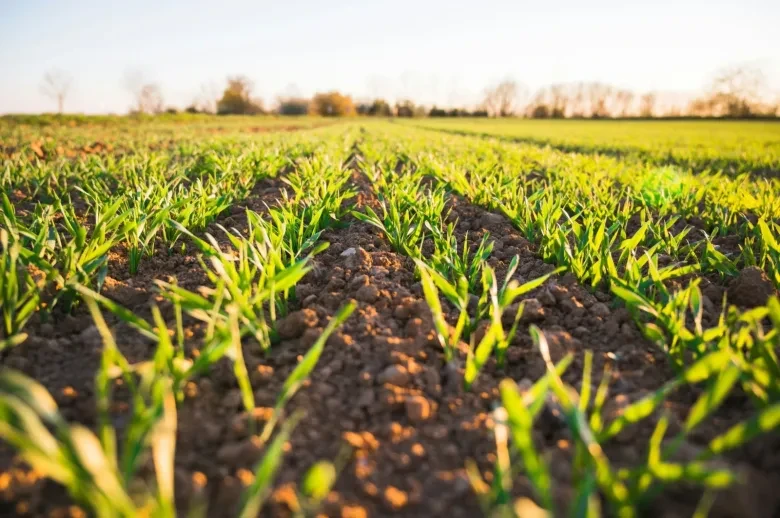
The US may run out of its own phosphorus reserves in about 40 years, and dependence on imports is already creating risks for agriculture. Europe, Latin America and Southeast Asian countries are highly dependent on phosphate supplies from China and Morocco. Scientists warn: without reliable availability of phosphorus, it is impossible to maintain current levels of food production.
The work was published in the Proceedings of the National Academy of Sciences.
Phosphorus is one of the three main elements needed by plants, along with nitrogen and potassium. this is the so-called NPK system. Most of the phosphorus for fertilizer production comes from phosphate ore, which is mined, crushed and treated with chemicals. In 2025, the US placed phosphate on the list of essential minerals due to concerns about possible supply disruptions.
A new study by specialists from the University of Arkansas and North Carolina State University has shown that a significant part of the necessary phosphorus is already accumulated in American agricultural soils and various types of waste.
Researchers analyzed data from 3,142 U.S. counties, including data dating back to 1866, and made projections up to 2050. They estimate that since 1866, about 145 teragrams of phosphorus, or 145 million tons, have been introduced into American farmland in the form of fertilizers. As of 2023, about 52 teragrams remained in arable land and another 47 teragrams in pasture.
At the same time, the problem is the extremely low efficiency of using phosphorus fertilizers. Phosphorus quickly binds to the soil and becomes unavailable to plant roots. According to scientists, about 80% of the phosphorus obtained from fertilizers is not assimilated by cultivated crops. Its residues can accumulate in the soil or pour into reservoirs, contributing to water pollution.
The researchers suggest moving from the current linear model of ore extraction, fertilizer production, input into the soil, and significant loss of the material to a circular system where phosphorus is returned to agriculture.
Manure, crop residues, animal bones, eggshells, sewage and sewage sludge can be sources of recycled phosphorus. According to the calculations of scientists, the amount of potentially recyclable phosphorus accumulated in these sources during the considered period is equivalent to almost 125% of the amount of phosphorus introduced into the fields.
However, there is no universal way of extracting phosphorus. For example, cattle manure contains a lot of water, so it is not economically advantageous to transport it over long distances. Processing will be more effective in regions where livestock farms are located close to agricultural land.
Scientists see particularly great opportunities to create such a system in Arkansas. In the north-west of the state, poultry farming and animal husbandry are actively developed, which produce a large amount of phosphorus-containing waste. In the east, the cultivation of rice, corn, and soybeans dominates, requiring significant amounts of phosphorus fertilizers.
According to the researchers, this creates conditions for the formation of a regional phosphorus economy, in which waste from animal husbandry and other industries can become a source of fertilizers for crop production.