




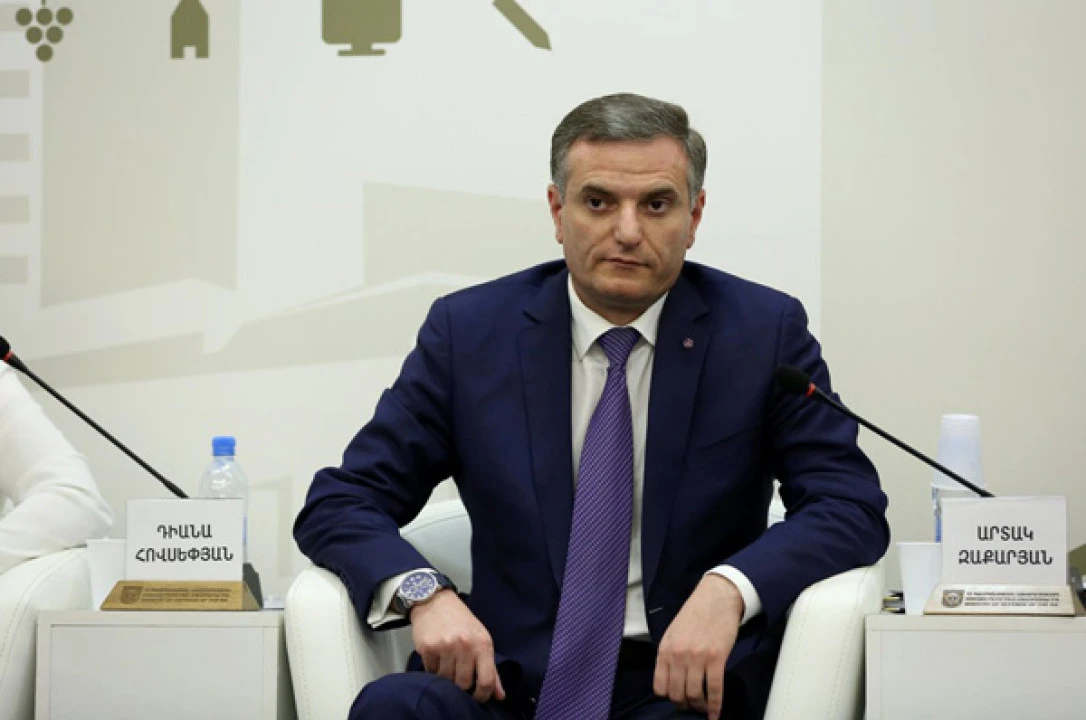
In the case of Nikol's government, we can consider that we are going the way of putting our state and sovereignty to the test. Artak Zakaryan, a member of the RPA Executive Body, wrote about this.
"We have said many times that as a result of the alien policy conducted by Nikol's government, Armenia will be at the center of conflicting interests of major powers. Today we can confidently say that after transferring Artsakh, which has multi-billion assets and is of strategic irreplaceable importance for Armenia, to the enemy, the Communist Party government, starting from 2025, is pushing all the citizens of Armenia into a new, dangerous trap.
Now we can say that we are in that trap. Those who see and understand the situation imagine the meaning of what I am saying. Those who do not understand and cannot see think that I am exaggerating and criticizing baselessly. God be with them.
If, as can be seen from the developments, the United States fails to destabilize Iran, Russia maintains and develops its influence on the Ukrainian front, and the Western influence weakens even more in Georgia, the prospects of turning the South Caucasus into a corridor controlled by the West will become unlikely.
Iran will vehemently oppose any deal that would expand Western or pan-Turkic influence near its borders. Moscow (and in some cases also Ankara) will also try to prevent the South Caucasus from turning into a strategic base for a number of Western countries and a gateway to Central Asia.
In this sense, Azerbaijan and Georgia conduct an equal role and face-saving policy in all possible scenarios.
In the case of Armenia, the main problem is not the choice between turning to the West or maintaining ties with the Russian Federation (EAEU). The main question for trapped Armenia is whether we will be able to maintain sufficient strategic independence and control over our own territories and transit routes in order to have a significant role (value, weight) for the competing forces in the South Caucasus, while not becoming a victim of their conflict.
After the change of power, it will be extremely difficult, but it is possible and necessary. And in the case of Nikol's government, we can consider that we are going the way of putting our state and sovereignty to the test.
The CP has already got what it wanted in the geopolitical trade, in the form of Western support in the last election. Instead, the CP will continue to satisfy foreign interests, even if it leads to conflict or new threats.
It is here that the historical parallel becomes particularly disturbing and familiar. A hundred years ago, Armenia again found itself between the clash of expanding regional powers, whose strategic ambitions ultimately determined the fate of our country. And they decided against us.
If the planned regional transformations really take place, then we risk becoming the main loser, because the principled struggle for our geographical position, in the case of Nikol's government, will hardly leave any opportunity to make independent choices.
What shall we do? Shall we continue to applaud the deepening contradictions with the Russians, without knowing the details, should we be excited by the TRIPP project, should we naively believe that the Turks and Azerbaijanis have planned a peaceful life for us, should we ignore the threatening developments in the Middle East, should we unconditionally believe in the Russians or Europeans, or should we collect our minds and get serious? with the problems of our country," Zakaryan noted.