

Euromedia24 on Play Store Euromedia24 on App Sore
BNB

$870.47

BTC

$113082

ADA

$0.868816

ETH

$4608.63

SOL

$213.76

31 °

Yerevan

20 °

Moscow

45 °

Dubai

20 °

London

26 °

Beijing

23 °

Brussels

16 °

Rome

23 °

Madrid

BNB

$870.47

BTC

$113082

ADA

$0.868816

ETH

$4608.63

SOL

$213.76

31 °

Yerevan

20 °

Moscow

45 °

Dubai

20 °

London

26 °

Beijing

23 °

Brussels

16 °

Rome

23 °

Madrid

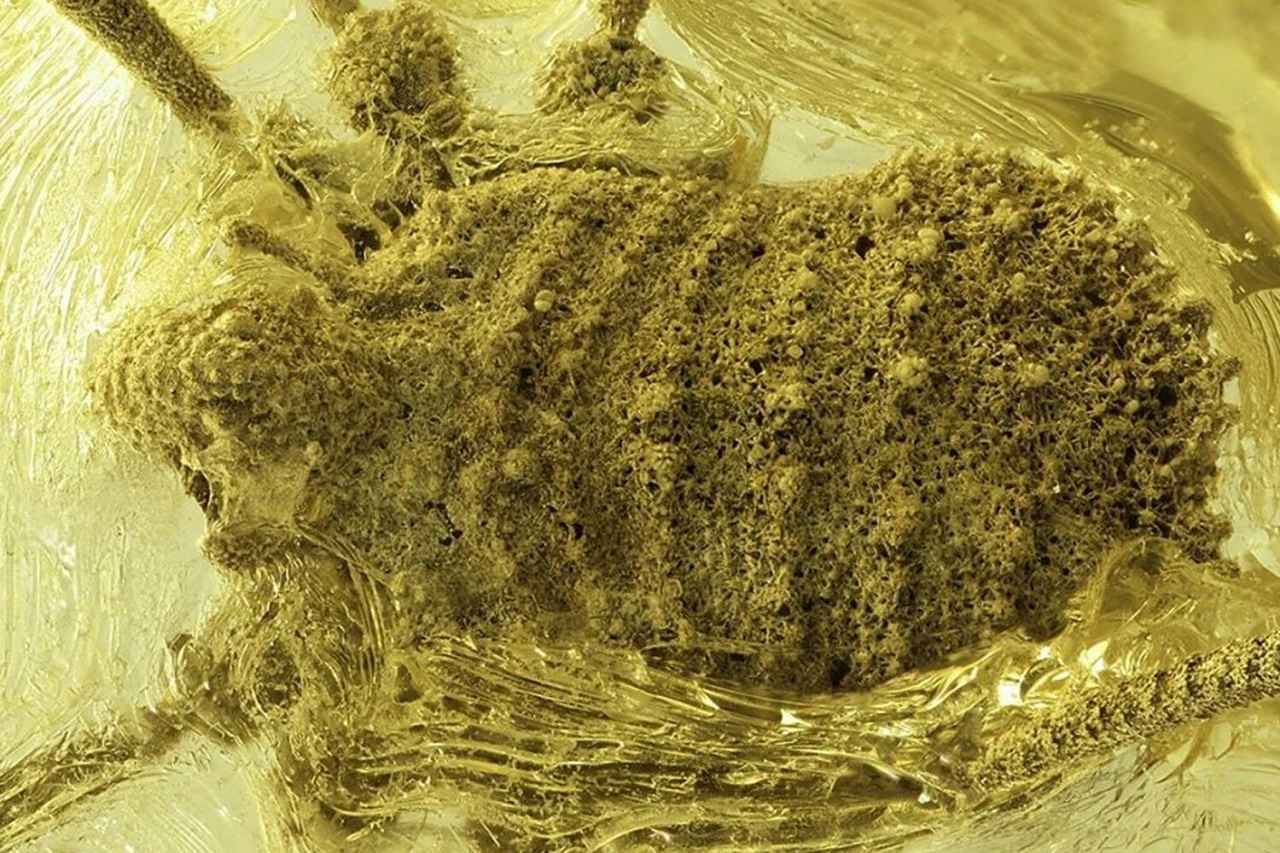
Scientists have discovered an unusual arachnid in amber, dating back 35 million years


Scientists have discovered a new type of spider web preserved in amber from about 35 million years ago. The new species, called Balticolasma wunderlichi, belongs to a rare group of harvestmen, Ortholasmatinae, members of which are not found in Europe today. The study was published in the journal Acta Palaeontologica Polonica (APP).


The unusual remains were found in two amber samples, one from the Baltic region and the other from Rovno (now Eastern Europe).


According to the researchers, this is the first known fossil of representatives of this subfamily. In the past, these spiders were thought to inhabit only East Asia and North and Central America. The discovery shows that their distribution area was significantly wider during the Eocene epoch.


Scientists examined the specimens using light microscopy and computer tomography, which allowed them to study the structure of the ancient creature in detail. It was found that the spider had complex combs on its body, web-like structures on its head, a unique eye tubercle and long legs, the second pair of which was noticeably longer than the others.


"One of the specimens was male and the other female, which allowed us to even study the structure of the genitalia, an important characteristic for classification. The finds are approximately 35 million years old. During that period, the climate of Northern Europe was significantly warmer and wetter than today, which contributed to the existence of a more diverse fauna," the scientists explained.


According to the authors, the discovery helps to fill a gap in our understanding of the evolution and distribution of harvestmen and shows that ancient European ecosystems were much richer than previously thought.

 

News

A product has been discovered that accelerates memory loss in men
A doctor explained whether an eyebrow clip can relieve migraines
Scientists have found that Neanderthal genes may be the cause of depression
The US has allowed Maduro to use Venezuelan funds to pay for lawyers
Araghchi. Iran is confident in Pakistan's seriousness as a mediator in negotiations with the US
Scientists have explained the phenomenon of "sixth sense".
Ara Gochunyan on Erdogan's message, denying genocide and opening the border (video)
Scientists have discovered an unusual arachnid in amber, dating back 35 million years
A scandalous revelation in Hayanist: body armor sent from the USA (video)
A non-obvious deep sleep condition has been detected
Terrible crimes through the eyes of Genocide survivors. new exhibition at HCTI (video)
An eight-centimeter-long worm was removed from a woman's brain in China
Arsen Harutyunyan is in the semi-finals
The reasons for the acute sense of smell in some people have been discovered
Humanitarian aid or neglected military property? the mystery of body armor in Hayanist (video)
Scientists have found that every person's brain is "wired" for music from birth
An unknown trigger for migraine attacks has been identified
There will be no light in dozens of addresses for three days
The White House announced the progress of the dialogue with Iran
Senator Schiff's statement on Armenian Genocide Memorial Day